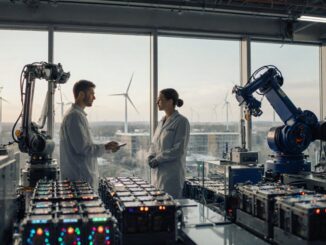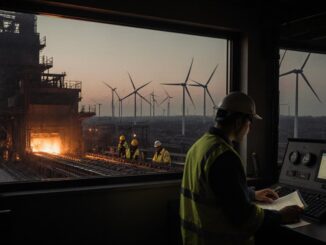
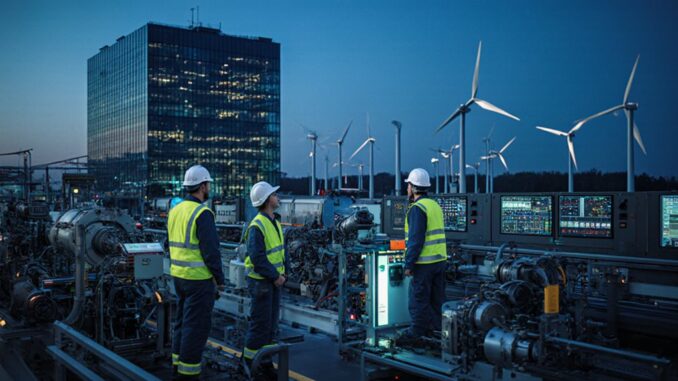
Siemens is a German industrial-technology group supplying automation, industrial software, electrification, building systems, rail technology, and digital services. Its equipment and software help manufacturers improve productivity, energy efficiency, quality control, and operational reliability. Siemens also supports grid modernization, rail signaling, and infrastructure digitalization. Through engineering, manufacturing, research, training, and service networks, it sustains skilled employment and export competitiveness. Its connected technologies illustrate how Germany’s industrial systems are evolving.
What Siemens Does in Germany Today
Siemens operates in Germany as a core industrial-technology supplier, combining automation hardware, industrial software, electrification systems, mobility equipment, and digital services for manufacturers, utilities, infrastructure operators, and public-sector clients. Its domestic role centers on helping customers modernize production assets, improve energy efficiency, integrate data flows, and maintain resilient technical operations. The company coordinates research, engineering, sales, project delivery, and service activities through major German locations, linking local industrial demand with global product development and export capabilities. Siemens headquarters strategy emphasizes proximity to key decision makers, research ecosystems, and national transport links while supporting coordinated management of German operations. Germany wide customer support is delivered through regional offices, field engineers, certified partners, training centers, and remote diagnostic capabilities. This footprint allows industrial users to obtain lifecycle assistance, software updates, commissioning expertise, and maintenance planning. Siemens also participates in German infrastructure modernization by supplying systems and services that support reliability, regulatory compliance, decarbonization objectives, and long-term asset availability across critical economic sectors.
Siemens’ Main Businesses and Technologies
That broad German operating footprint is organized around a portfolio of industrial automation, digital software, electrification, mobility, and smart-infrastructure technologies. Siemens Digital Industries supplies programmable controllers, drives, sensors, machine-control systems, and industrial software for factory automation. Its software platforms connect engineering design, production planning, execution, and operational data, supporting digital twins and more integrated manufacturing workflows.
Siemens Smart Infrastructure focuses on building automation, power distribution, grid management, fire safety, and energy-efficient facilities. The business combines hardware with Digital services that monitor equipment performance, manage loads, and improve asset reliability. Siemens Mobility develops rail vehicles, signaling, electrification systems, and rail-control technologies for urban and intercity networks. Siemens Healthineers, separately listed but strategically associated with the group, provides imaging, laboratory diagnostics, and clinical digital tools. Across these activities, Siemens emphasizes interoperable systems that link physical assets, electrical networks, and data environments, allowing industrial operators and public infrastructure providers to improve productivity, resilience, and energy efficiency.
How Siemens Shaped German Engineering
Siemens accelerated German industrial growth by scaling electrification across power systems, transport, and manufacturing infrastructure. Its engineering practices helped establish rigorous standards for reliability, interoperability, and industrial safety. Continued investment in electrical, automation, and digital technologies reinforced Germany’s reputation for high-precision engineering innovation.
Electrification And Industrial Growth
As electrification accelerated across late nineteenth- and early twentieth-century Germany, Siemens became a central engineering force in converting scientific advances in power generation, transmission, and electric machinery into industrial infrastructure. Its equipment linked utilities, factories, municipalities, and transport networks, helping industry replace localized mechanical power with flexible electrical systems. The resulting expansion supported higher output, urban growth, and increasingly integrated production.
- Generators and transmission equipment extended dependable power beyond individual factory sites.
- Electrified transport, including rail and urban systems, improved movement of workers, goods, and passengers.
- Electric drives increased machine-level control, enabling more efficient manufacturing layouts.
- Early industrial automation emerged through electrically controlled processes, reducing manual intervention in repetitive operations.
Siemens thus influenced Germany’s industrial scale by supplying the practical systems that turned electricity into productive capacity across major economic sectors.
Engineering Standards And Innovation
The expansion of electrified industry also depended on common engineering practices that made complex systems reliable, interoperable, and scalable. Siemens helped institutionalize these practices through standardized components, rigorous testing, technical documentation, and integrated control architectures across power, transport, manufacturing, and building systems. Its engineering approach linked hardware design with automation software, enabling factories and infrastructure operators to adopt repeatable methods rather than isolated solutions. This contributed to industrial interoperability by improving communication among machines, networks, and operational technologies from different suppliers. Siemens also influenced German engineering culture through vocational training, research partnerships, and long-term investment in applied innovation. As industrial systems became digital, its focus expanded toward secure automation, data management, and cybersecurity resilience. These capabilities supported Germany’s reputation for precision manufacturing while helping firms modernize complex production environments without sacrificing reliability, safety, or maintainability.
Siemens in German Manufacturing
Within German manufacturing, Siemens functions as a major supplier of industrial automation, digitalization, drive systems, and electrification technologies. Its equipment and software support productivity, quality control, energy efficiency, and operational reliability across automotive, chemicals, machinery, pharmaceuticals, and process industries. The company’s importance stems from its role in linking production assets with standardized engineering and control architectures.
- Automation hardware: Controllers, sensors, motors, and drives coordinate machinery and reduce manual variation.
- Industrial software: Engineering and lifecycle-management tools help manufacturers design, commission, maintain, and optimize production equipment.
- Electrification infrastructure: Distribution systems, converters, and power-management components support stable energy use in factories.
- Workforce capability: Training requirements increasingly shape an IoT workforce able to operate connected equipment, interpret production data, and maintain digitally controlled assets.
Siemens thus remains embedded in Germany’s manufacturing base not merely as an equipment vendor, but as a supplier of interoperable industrial systems. Its portfolio helps firms preserve precision, scale output, and meet demanding regulatory, safety, and export-quality requirements.
Siemens and Smart Factory Technology
Siemens positions smart-factory technology around the integration of operational technology, industrial software, and data connectivity across the production lifecycle. Its portfolio links programmable controllers, drives, sensors, edge devices, digital-twin applications, and manufacturing-execution systems into interoperable automation environments. This architecture helps manufacturers monitor assets in real time, simulate process changes before deployment, and coordinate engineering, production, and maintenance data.
For German industry, the strategic value lies in improving productivity while supporting flexible, high-mix manufacturing. AI production planning can use operational data to optimize scheduling, material flows, quality inspection, and equipment utilization, reducing bottlenecks and unplanned downtime. Siemens also emphasizes open industrial ecosystems, enabling customers to combine its platforms with specialized software, cloud services, and partner applications.
Cybersecurity resilience is integral to this model because connected factories expand exposure across devices, networks, and software layers. Segmented architectures, identity controls, monitoring, and secure update processes help protect production continuity and intellectual property across distributed industrial operations.
Siemens in Energy and Electrification
Siemens supports Germany’s energy shift through grid-modernization systems that improve transmission reliability, automation, and operational visibility. Its electrification portfolio spans medium- and low-voltage distribution, building infrastructure, charging systems, and industrial power management. These capabilities also aid renewable-energy integration by balancing variable generation, strengthening grid resilience, and enabling more flexible consumption.
Grid Modernization Leadership
As Germany expands renewable generation and electrifies transport, heating, and industry, grid modernization has become a central requirement for maintaining system reliability and competitiveness. Siemens supports this change through digital grid-management systems, automation, and transmission infrastructure expertise.
- Advanced monitoring improves visibility across decentralized generation assets.
- Grid-control software helps operators balance variable wind and solar output.
- Automation technologies strengthen grid resilience during faults and demand peaks.
- Cybersecurity upgrades protect operational networks from increasingly sophisticated threats.
Its role extends beyond equipment supply: the company contributes engineering capacity, data integration, and lifecycle services for utilities and industrial customers. These capabilities help reduce congestion, speed up the connection of renewable projects, and improve planning accuracy. For Germany, modernization is not merely an infrastructure investment, but a prerequisite for reliable decarbonization, industrial continuity, and energy-system security.
Electrification Technology Portfolio
Across Germany’s accelerating shift toward electrified industry, mobility, and buildings, Siemens provides a broad technology portfolio spanning power distribution, electrification automation, smart infrastructure, and industrial energy management. Its offerings include medium- and low-voltage switchgear, protection devices, substations, digital monitoring platforms, building controls, and charging infrastructure. These systems strengthen electrical infrastructure by improving reliability, safety, and operational visibility across factories, commercial sites, transport networks, and municipal assets. Grid automation software and connected field equipment enable operators to detect faults, balance loads, and coordinate distributed assets more efficiently. For manufacturers, industrial power management tools combine metering, analytics, and control functions to reduce energy waste, manage peak demand, and maintain power quality. The portfolio also supports renewable integration through adaptable connection, monitoring, and control capabilities for changing electricity flows.
Renewable Energy Integration
Germany’s expanding renewable generation base increases the need for grid infrastructure that can manage variable power flows, decentralized assets, and tighter stability requirements. Siemens supports this shift through electrification technologies, automation, and digital grid-management systems that help utilities integrate offshore wind and distributed solar capacity.
- High-voltage transmission equipment strengthens connections between coastal generation zones and industrial demand centers.
- Grid software improves forecasting, congestion management, and real-time balancing across fluctuating renewable output.
- Substation automation enables faster fault isolation and more resilient network operation.
- Storage solutions, including battery systems and hydrogen-linked infrastructure, can absorb surplus electricity and support frequency control.
These capabilities matter because Germany’s energy transition depends not only on adding generation capacity, but also on modernizing networks to maintain reliability, affordability, and industrial competitiveness.
Siemens and Germany’s Rail Networks
Within Germany’s rail ecosystem, Siemens Mobility serves as a major supplier of rolling stock, signaling, electrification, and digital control systems. Its portfolio includes regional and high-speed trains, locomotives, rail automation platforms, and components supporting network modernization. The company’s importance extends beyond vehicle manufacturing: its signaling technology helps rail operators increase line capacity, improve punctuality, and manage mixed passenger and freight traffic more efficiently.
Siemens supports deployment of European Train Control System equipment and other Interoperability standards that enable cross-border operations and more consistent safety requirements. Digital control platforms use real-time operational data to optimize timetables, maintenance planning, and energy consumption. Predictive maintenance tools can identify component wear before failures disrupt service, reducing lifecycle costs for operators.
The company also contributes to passenger-facing modernization through Digital ticketing systems and integrated mobility platforms. These systems connect fares, journey information, and service updates, supporting Germany’s broader effort to make rail travel more reliable, accessible, and competitive with road and air transport.
Siemens Healthineers’ Role in German MedTech
Beyond transport infrastructure, Siemens’ influence on Germany’s technology base extends into medical technology through Siemens Healthineers, a major supplier of diagnostic imaging, laboratory diagnostics, cancer-care systems, and digital health software. Its portfolio links German engineering capabilities with hospital requirements for faster diagnosis, standardized data, and more precise treatment planning.
- Imaging platforms, including MRI, CT, and molecular imaging, support early detection and workflow efficiency.
- Laboratory automation combines analyzers, informatics, and testing systems to increase throughput while improving traceability.
- Radiation oncology equipment integrates imaging, planning, and treatment delivery for targeted cancer care.
- Digital platforms enable AI clinical workflow tools that prioritize cases, support reporting, and connect operational data across departments.
The company’s significance lies in systems integration rather than isolated devices. Interoperable architectures can help hospitals exchange imaging, laboratory, and clinical information securely, supporting cross border hospital integration within European care networks. This positions German MedTech around connected diagnostics, evidence-based decisions, and scalable clinical infrastructure.
Siemens’ Economic Impact on Germany
Siemens influences Germany’s economy through high-skilled employment, domestic manufacturing activity, and demand across engineering supply chains. Its industrial output supports sectors including automation, electrification, transport, and digital infrastructure. Sustained R&D investment and export-oriented technology portfolios also reinforce Germany’s innovation capacity and global industrial competitiveness.
Employment and Industrial Output
As one of Germany’s largest industrial employers, Siemens supports domestic economic activity through high-skilled manufacturing, engineering, software development, and technical services. Its German operations sustain specialized jobs across factories, research-linked production sites, regional service centers, and supply-chain networks.
- Workforce training strengthens technical capabilities in mechatronics, electrical systems, digital maintenance, and production management.
- Industrial automation deployment raises plant productivity by integrating controls, sensors, drives, and manufacturing execution systems.
- Domestic procurement supports component makers, machine builders, logistics firms, and installation contractors serving industrial sites.
- Stable engineering and service employment helps preserve industrial capacity in regions dependent on advanced manufacturing.
The company’s output contributes to equipment availability in energy, mobility, buildings, and process industries. Its employment base also reinforces Germany’s skilled-labor ecosystem by creating demand for technicians, engineers, programmers, and certified industrial specialists.
Innovation and Export Strength
Through sustained investment in industrial software, automation, electrification, and digital infrastructure, Siemens strengthens Germany’s innovation base and export competitiveness. Its research, engineering, and manufacturing capabilities translate advanced technologies into scalable products for factories, energy systems, transport networks, and healthcare equipment. This supports high-value exports while reinforcing Germany’s position in global capital-goods markets.
Siemens’ globalization strategy combines domestic engineering depth with international production, sales, and service networks, allowing German-developed platforms to reach diversified demand centers. Digital twins, industrial IoT systems, and grid-management technologies also raise customer productivity and create recurring software and lifecycle-service revenues. At the same time, localized sourcing, multi-regional manufacturing, and supplier qualification programs improve supply chain resilience. These measures reduce exposure to component disruptions and help preserve delivery reliability for export-oriented industrial customers.
Siemens and Germany’s Industrial Digitalization
Within Germany’s industrial modernization agenda, Siemens functions as a key supplier of automation hardware, industrial software, and digital platforms that connect factory operations with data-driven management systems. Its portfolio supports manufacturers seeking higher productivity, energy efficiency, traceability, and resilience across complex production networks.
- Automation integration: PLCs, drives, sensors, and control systems enable coordinated machine operation and standardized data capture.
- Digital twins: Siemens software allows firms to simulate products, factories, and processes before physical deployment, reducing commissioning risks and engineering cycles.
- Industrial IoT: Platforms such as Siemens Xcelerator connect operational technology with cloud analytics, supporting predictive maintenance and real-time optimization.
- Workforce transition: Digital tools require technicians and engineers to develop software, cybersecurity, and data-management capabilities alongside mechanical expertise.
Competitor comparisons with ABB, Schneider Electric, and Rockwell Automation indicate Siemens’ advantage lies in its broad industrial stack and German manufacturing proximity. Global digitalization lessons from China, the United States, and Nordic markets also underscore the importance of interoperable standards, secure connectivity, and scalable implementation for Mittelstand companies.

The German Companies Editorial Team profiles the businesses behind Germany’s economy. Coverage ranges from internationally known corporations and DAX companies to family-owned Mittelstand businesses, hidden champions, technology companies and startups. Profiles place companies within their industry, region and economic context rather than simply presenting corporate information.