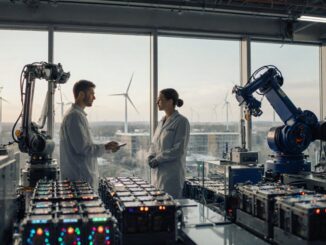
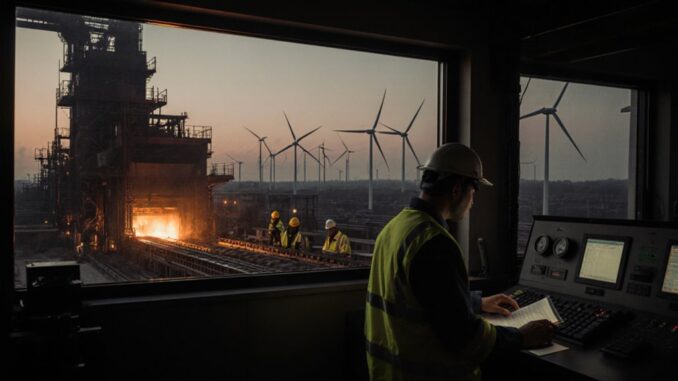
Energy prices matter greatly to German industry because electricity and gas are major input costs for chemicals, metals, glass, paper, cement, and refining. German firms face wholesale-price volatility alongside grid fees, taxes, carbon costs, and import dependence. These charges can exceed those faced by US shale-gas users or French nuclear-backed competitors. Higher costs narrow margins, delay investment, and encourage output cuts or overseas expansion. The wider effects on jobs, decarbonisation, and policy options become clearer below.
Why German Industry Faces High Energy Costs
German industry faces structurally high energy costs because wholesale power prices, grid charges, taxes, and carbon-compliance costs remain above those in many competing manufacturing regions. The gap reflects limited domestic fossil-fuel supply, expensive import dependence, and the investment required to expand transmission networks while integrating variable renewable generation. Although renewable capacity can reduce marginal power costs during high-output periods, system-balancing, backup, and network expenses still influence final industrial bills.
Policy design also shapes competitiveness. Carbon pricing under the EU Emissions Trading System, electricity-tax rules, and uneven relief mechanisms affect contract costs and investment decisions. Firms with high Energy intensity are especially exposed when forward prices rise or hedging becomes costly. Cost volatility has increased since the gas-market shock, complicating budgeting, procurement, and long-term project appraisal. Compared with regions offering lower gas prices, regulated tariffs, or larger subsidies, Germany’s manufacturers face a more demanding cost base, even as targeted compensation and renewable-power contracts provide partial mitigation.
Germany’s Most Energy-Intensive Industrial Sectors
These cost pressures are concentrated in a relatively small group of industries whose production processes require large, continuous volumes of electricity, natural gas, heat, or chemical feedstocks. Germany’s Energy intensive sectors include basic metals, chemicals, glass, paper, refining, and building materials, with output often competing directly against imports from lower-cost production locations.
Steel and chemicals carry particular strategic weight because they supply automotive, machinery, construction, pharmaceuticals, and defence value chains. Blast furnaces, electric arc furnaces, crackers, ammonia plants, and chlorine production cannot easily reduce energy use without disrupting throughput, raising unit costs, or risking equipment damage. Their exposure consequently affects investment decisions, plant utilisation, and long-term capacity planning.
Cement and ceramics are similarly dependent on high-temperature kilns, where fuel requirements remain substantial despite efficiency improvements. Policy instruments, including carbon pricing, emissions allowances, and targeted relief measures, shape the competitiveness of these sectors. For Germany, preserving domestic production capacity is increasingly linked to industrial resilience, export performance, and the pace of decarbonisation.
Electricity Prices for German Manufacturing
German manufacturers face electricity costs shaped not only by wholesale power prices but also by grid fees, taxes, and levies. These non-energy charges can materially widen cost gaps with competitors in the United States and Asia, particularly for power-intensive production. Policy decisions on network tariffs and industrial relief will *consequently* influence investment, output, and export competitiveness.
Industrial Power Cost Pressures
Although wholesale electricity prices have eased from their 2022 peak, German manufacturers still face power costs well above pre-crisis levels and often above those paid by industrial competitors in the United States and China. Energy-intensive sectors, including chemicals, metals, glass, and paper, are particularly exposed because electricity represents a material share of unit production costs. Forward power contracts remain volatile, reflecting gas-market risk, weather-dependent generation, and uncertainty over future capacity. This weakens margins, complicates investment planning, and can shift incremental production toward lower-cost regions. Renewable access has become a competitive differentiator, as long-term power purchase agreements can improve price visibility for eligible buyers. Demand flexibility also offers potential savings by aligning consumption with periods of abundant wind and solar output. Policy credibility matters because companies require predictable market conditions before committing capital to electrification and domestic expansion.
Grid Fees And Levies
Beyond wholesale power costs, grid fees and statutory levies materially shape the delivered electricity price paid by German manufacturers. Grid charges finance transmission and distribution networks, including upgrades required for electrification, renewable integration, and regional congestion management. Their level varies by network area and consumption profile, creating meaningful differences among industrial sites.
Renewable support costs have increasingly shifted from direct power-bill surcharges toward federal budget mechanisms, but policy costs have not disappeared. Levy reforms have altered how system expenses are allocated, while taxes, balancing costs, and network-related surcharges remain relevant to final bills. Energy-intensive users may qualify for industrial exemptions or reduced charges when they demonstrate high load factors, predictable demand, or exposure to international trade. Eligibility rules, reporting duties, and European state-aid constraints determine the practical value of such relief for individual facilities.
Global Competitiveness Risks
Persistently higher electricity prices than those faced by competitors in the United States, China, and parts of the Middle East threaten the cost position of German manufacturing, particularly in electricity-intensive sectors such as chemicals, metals, paper, glass, and battery materials. Energy intensive segments face narrower margins when power costs exceed those available in regions with cheaper gas, subsidized tariffs, or abundant renewables. This differential can influence investment decisions, production location, and export pricing. Price shocks also complicate long-term contracting and weaken confidence in capacity expansion. German producers may preserve competitiveness through efficiency upgrades, power-purchase agreements, and demand flexibility, but these measures cannot fully offset sustained structural gaps. Policy choices on grid charges, industrial relief, carbon-cost compensation, and renewable buildout consequently carry direct implications for investment retention, supply-chain resilience, and the country’s manufacturing base.
Gas Prices and German Industry
Natural gas remains a major cost driver for Germany’s chemicals, glass, ceramics, metals, and food-processing industries. When domestic gas prices exceed those of competing regions, margins narrow and firms may reduce output, delay investment, or shift production abroad. Price stability, infrastructure capacity, and targeted policy support accordingly influence both near-term operating decisions and long-term industrial competitiveness.
Gas-Intensive Manufacturing Costs
German wholesale gas prices remain a critical cost driver for energy-intensive manufacturers, particularly chemicals, glass, ceramics, paper, and fertilizer producers, whose competitiveness depends on reliable access to gas at prices comparable with those faced by U.S. and Asian rivals. Gas is both a fuel and a feedstock, so price movements affect furnace operation, steam generation, ammonia synthesis, and intermediate-material costs. European benchmark volatility since 2022 has increased budgeting risk and raised working-capital requirements for firms purchasing on shorter horizons. Supply contract terms determine exposure to spot markets, indexation mechanisms, volume commitments, and balancing penalties. Larger consumers can reduce some costs through demand flexibility, shifting non-continuous processes away from peak-price periods where technically feasible. Policy measures affecting storage obligations, LNG infrastructure, carbon pricing, and network charges therefore influence delivered gas costs alongside wholesale quotations for industrial users across Germany.
Competitiveness and Production Decisions
Elevated gas costs reshape production decisions across German industry by widening the operating-cost gap with regions benefiting from lower-priced domestic gas or subsidized energy. Energy-intensive producers assess whether marginal output remains profitable when fuel and power expenses exceed competitors’ benchmarks. Chemicals, metals, glass, and fertilizers face particular pressure because gas represents a large share of variable costs.
Companies may reduce capacity utilization, shift selected production abroad, or prioritize higher-margin product lines. These choices affect industrial competitiveness, export pricing, and supply-chain resilience. Persistent price uncertainty also complicates investment planning, raising hurdle rates for new plants, electrification projects, and long-term procurement contracts. Policy measures, including electricity-price relief, carbon-cost compensation, and faster renewable deployment, can narrow the gap, but their effectiveness depends on predictable rules, infrastructure availability, and durable energy-market signals.
Why German Manufacturers Pay More Than Rivals
Compared with major industrial competitors, manufacturers in Germany face a structurally higher energy-cost burden driven by taxes, grid fees, carbon pricing, and relatively expensive wholesale electricity and gas. Energy-intensive firms pay more than many US producers benefiting from low-cost shale gas, while French competitors draw on nuclear-heavy generation and lower wholesale volatility. Regional price gaps within Europe also persist because transmission constraints, differing generation mixes, and national levy structures prevent a fully unified power market.
German policy provides partial relief through electricity-tax reductions, compensation for indirect EU emissions costs, and exemptions for selected industries. However, eligibility rules and state-aid limits leave substantial charges in final bills. Tariff impacts are especially material for continuous-load sectors, where network costs and peak-demand charges cannot be easily avoided. Carbon leakage risks rise when imported materials face lower energy and emissions costs than domestic output. These disparities weaken margins, reshape export pricing, and contribute to an investment slowdown across energy-intensive manufacturing, even when global commodity prices decline.
How Energy Prices Shape Investment Decisions
These cost differentials increasingly determine where industrial capital is deployed. For energy-intensive investors, German power and gas costs affect projected margins, hurdle rates, and the viability of long-lived assets. Decisions now weigh current tariffs against expected grid charges, carbon costs, subsidy durability, and wholesale-market volatility.
- Project economics: Higher operating-cost assumptions reduce net present value and lengthen payback periods for electrification, hydrogen, and process upgrades.
- Investment signals: Stable contracts, predictable renewable supply, and credible capacity-market rules can improve financing terms and support board approval.
- Risk perception: Frequent policy revisions or uncertain relief mechanisms raise discount rates, particularly for capital-intensive facilities with multi-decade lifetimes.
- Policy leverage: Targeted industrial power measures, faster permitting, and expanded transmission can narrow cost uncertainty without weakening decarbonisation incentives.
Investors *consequently* assess Germany not only by headline energy prices, but by the reliability of its regulatory framework and its ability to translate climate targets into bankable market conditions.
Production Cuts, Jobs, and Industrial Relocation
When energy costs remain materially above those of competing regions, industrial firms often respond first by curbing output, delaying maintenance and investment, or shifting marginal production to lower-cost sites. In energy-intensive segments such as chemicals, metals, glass, and paper, production cuts can quickly reduce plant utilisation and weaken margins, especially where contracts limit the ability to pass costs through to customers.
The effects extend beyond factory gates. Lower output reduces demand for transport, engineering, maintenance, and business services, placing pressure on the regional labor market. Short-time work can cushion initial shocks, but prolonged underutilisation raises the risk of layoffs and lost skills.
Industrial relocation is typically incremental rather than immediate: new capacity, supplier contracts, and export-oriented orders may be directed abroad first. This can alter Germany’s supply chain position, reducing local procurement and investment multipliers. Policy tools such as targeted electricity-price relief, grid-cost reform, and faster permitting can influence whether firms retain domestic production while preserving competition rules.
Energy Costs and Industrial Decarbonisation
The same cost pressures shaping production decisions also affect the pace of industrial decarbonisation. Energy-intensive firms must weigh emissions targets against the immediate competitiveness impact of Electricity cost, particularly when electrified processes require large, predictable power volumes.
- Green investment cases weaken when wholesale-price volatility raises operating-risk assumptions.
- Hydrogen, electric furnaces, and carbon-capture projects depend on long-term demand, infrastructure, and credible regulatory frameworks.
- EU carbon pricing increases the relative cost of emitting, but free-allocation changes and global competition complicate investment timing.
- Corporate investment strategy increasingly prioritises projects with contracted renewable supply, stable offtake, and measurable compliance value.
Germany’s industrial transition hinges not only on technology availability but on financing conditions and confidence in future energy-market rules. Higher energy bills can redirect capital toward short-term efficiency measures rather than transformational assets. Conversely, reliable low-carbon power contracts can improve project economics, support lenders’ risk assessments, and help manufacturers retain production while reducing emissions.
How Germany Could Cut Industrial Energy Costs
Reducing industrial energy costs in Germany requires a policy mix that lowers wholesale-price volatility, trims electricity taxes and grid charges, and accelerates investment in domestic generation and networks. The most immediate relief would come from financing renewable-energy support and selected grid expenditures through the federal budget rather than electricity bills, reducing major cost drivers for power-intensive users.
Longer term, faster permitting for wind, solar, transmission lines, storage and flexible gas capacity would expand low-marginal-cost supply and reduce congestion. A better Market design could reward demand response, storage and firm clean capacity while preserving efficient price signals for investment.
Targeted contracts for difference, carbon contracts and long-term power-purchase agreements can lower financing costs for industrial electrification without permanently shielding firms from market conditions. Grid tariffs should also be reformed to reward predictable, flexible consumption near generation centres. Such measures would improve competitiveness, but their fiscal cost and state-aid implications require disciplined targeting and transparent sunset clauses.
The Energy & Infrastructure Editorial Team covers Germany’s changing energy and infrastructure landscape. Key topics include the Energiewende, renewable energy, electricity grids, hydrogen, energy storage, industrial energy supply and major infrastructure projects. The editorial focus is on explaining how energy policy, technology and infrastructure affect German industry, businesses and the wider European economy.