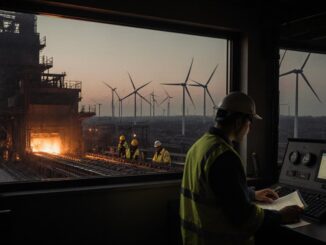
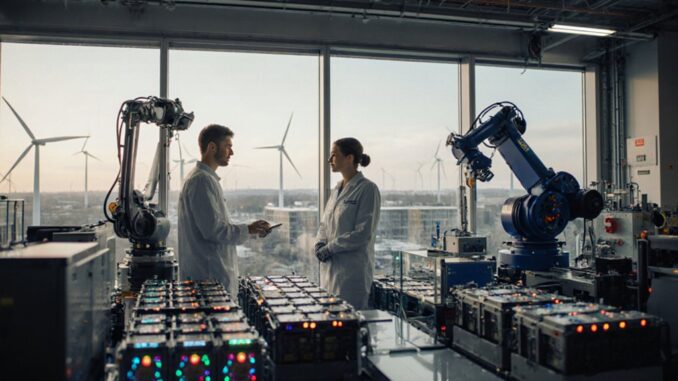
Germany’s innovation economy combines R&D spending near 3% of GDP, advanced manufacturing, export-focused firms, and a skilled workforce. Its Mittelstand SMEs, Fraunhofer institutes, technical universities, and dual-training system link research to industrial production. Manufacturing generated about 18% of gross value added in 2023, above the EU average. Yet scale-up finance, digital infrastructure, grid capacity, and clean-tech supply chains remain constraints. The sections ahead explain the institutions, advantages, and pressures shaping this model.
What Powers Germany’s Innovation Economy?
Germany’s innovation economy is powered by a coordinated mix of industrial specialization, sustained research investment, and export-oriented firms. Research and development spending stands near 3% of GDP, placing Germany above the EU average and alongside leading OECD innovators. Public institutions, including the Fraunhofer and Max Planck networks, translate scientific capacity into commercially relevant knowledge, while universities and regional clusters support skilled labor formation.
Policy consistency strengthens long-term investment decisions through predictable funding, vocational education, competition rules, and support for applied research. Compared with more venture-capital-dependent systems, Germany relies more heavily on established firms, supplier networks, and cooperative research arrangements. This model broadens diffusion of technology across regions and company sizes, although startup financing remains comparatively limited.
Industrial resilience is reinforced by diversified export markets, strong supplier relationships, and coordinated energy, trade, and workforce policies. Continued competitiveness depends on accelerating digital adoption, reducing administrative barriers, and maintaining research intensity amid demographic pressures and global subsidy competition.
Engineering and Advanced Manufacturing
Germany’s innovation economy is anchored in precision engineering, with specialized machinery, automotive systems, and industrial equipment sustaining high-value exports. Compared with many advanced economies, Germany combines dense supplier networks with applied research institutions to translate technical expertise into production capacity. Policies supporting Industry 4.0, automation, and digital standards further position its manufacturers as leaders in smart, connected production.
Precision Engineering Excellence
Built on dense industrial clusters, dual vocational training, and applied research networks, Germany remains a leading European center for precision engineering and advanced manufacturing. Its Mittelstand suppliers specialize in machine tools, optics, industrial components, and measurement systems, supporting export competitiveness across automotive, chemicals, and medical technology. Manufacturing contributed roughly 18 percent of German gross value added in 2023, substantially above the EU average, reinforcing the sector’s strategic weight. Public support through Fraunhofer institutes, export credit instruments, and skills programs helps firms translate research into high-tolerance production. Compared with lower-cost competitors, Germany competes through reliability, certification, and specialized engineering rather than volume alone. Automation breakthroughs strengthen output consistency, while regional supplier networks promote resilient supply chains. Energy costs and labor shortages, however, remain constraints requiring targeted investment in efficiency, training, and infrastructure.
Smart Manufacturing Leadership
Germany ranks among Europe’s leading adopters of Industry 4.0, integrating connected sensors, industrial software, robotics, and data analytics across automotive, machinery, chemicals, and electronics production. Its manufacturing base benefits from high research intensity, dense supplier networks, and Mittelstand firms that specialize in export-oriented equipment. Compared with many European peers, Germany combines advanced factory deployment with coordinated standards, vocational education, and public support for digitalization. Industry transformation is guided by an automation strategy focused on productivity, resilience, energy efficiency, and supply-chain visibility. A leadership mindset emphasizing engineering quality and long-term investment supports adoption, although smaller firms face financing, cybersecurity, and interoperability constraints. Workforce upskilling remains central: apprenticeships, technical colleges, and company training help workers operate collaborative robots, analyze production data, and maintain increasingly software-defined industrial systems across regional production clusters.
The Mittelstand and Export Leadership
At the core of Germany’s export model is the Mittelstand: mainly family-owned small and medium-sized firms that combine specialized engineering, long-term investment, and close integration with global industrial supply chains. These firms dominate niche segments in machinery, automotive components, chemicals, and industrial equipment, often serving customers across dozens of markets. Mittelstand culture emphasizes apprenticeship, regional roots, patient ownership, and incremental product improvement rather than rapid scaling or short-term financial returns.
Germany’s export networks are reinforced by trade finance, logistics infrastructure, industry associations, and vocational training systems that align skills with manufacturing demand. SMEs account for roughly 99 percent of German enterprises and provide a large share of employment, although large multinationals generate substantial export value. Compared with more consumption-led economies, Germany relies more heavily on capital-goods exports, creating exposure to global investment cycles and external demand shocks. Policy priorities consequently include reducing energy costs, easing administrative burdens, expanding market access, and helping smaller exporters diversify beyond China and other concentrated destinations.
Research Funding and Technology Transfer
Sustaining the Mittelstand’s export specialization depends on a research system that links public laboratories, universities, and industrial users. Germany channels roughly 3% of GDP into research and development, placing it above the EU average and near leading innovation economies. Its distinctive advantage lies in translating engineering research into scalable industrial processes through coordinated federal, state, and sectoral funding.
- Fraunhofer institutes provide contract research tailored to manufacturing, energy, and digitalization needs.
- Public private partnerships reduce commercialization risk for smaller suppliers lacking large internal R&D budgets.
- Applied innovation grants support prototypes, testing facilities, and adoption of advanced production technologies.
- Technology-transfer programs connect patents, pilot lines, and regional industrial clusters.
Compared with more venture-capital-driven systems, Germany relies more heavily on mission-oriented public institutions and co-financed industrial research. This model supports incremental, export-relevant innovation, although fragmented funding rules and slower licensing procedures can delay market entry. Policy priorities increasingly include simplifying grant access and accelerating transfer from laboratory results to industrial deployment.
Universities, Vocational Training, and Talent
Germany’s universities supply research talent through strong engineering, science, and applied-research networks, linking graduate education to industrial innovation. Its dual vocational training system complements this pipeline by combining classroom instruction with employer-based apprenticeships, producing skilled technicians at scale. Compared with systems that separate academic and technical tracks more sharply, Germany’s policy framework creates broader pathways from education to advanced manufacturing and technology firms.
Universities Driving Research Talent
Universities anchor Germany’s research talent pipeline, combining publicly funded science with industry-linked training across engineering, manufacturing, and applied technology. Federal and state funding supports a dense network of technical universities and applied-sciences institutions, positioning Germany comparatively strongly within Europe’s research base.
- Technical universities concentrate doctoral research in engineering, materials, and computing.
- Universities of applied sciences prioritize practice-oriented curricula and regional innovation.
- University Industry partnerships connect laboratories with corporate research priorities.
- Research industry translation is reinforced through transfer offices, patents, and collaborative projects.
Policy frameworks reward competitive grants, excellence clusters, and cross-disciplinary centers. Compared with more centralized systems, Germany’s federal structure distributes research capacity across regions, linking metropolitan hubs with specialized campuses. This model broadens access to advanced scientific training while sustaining research depth in sectors central to industrial competitiveness.
Vocational Training for Industry
Beyond university research, Germany’s dual vocational training system supplies industry with skilled technicians, mechatronics specialists, and manufacturing workers through apprenticeships that combine classroom instruction with paid company placements. Roughly half of school leavers enter vocational pathways, linking curricula to regional employer demand and nationally recognized qualifications. Chambers of commerce, unions, vocational schools, and firms jointly set standards, limiting mismatches between training and production requirements. These industry partnerships support export-oriented sectors including automotive, machinery, chemicals, and precision engineering. Compared with more classroom-centered Apprenticeship systems, Germany’s model gives firms substantial responsibility for wages, equipment, and workplace learning, while public institutions oversee certification. Policy challenges include demographic decline, digitalization, and competition from universities. Expanding training in software, battery production, and advanced manufacturing is thus central to maintaining industrial capacity and productivity.
Startups, Venture Capital, and Scale-Ups
Although Germany has become Europe’s largest startup market by funding volume, its innovation ecosystem remains more effective at creating technically strong young firms than at financing their rapid expansion. Berlin, Munich, and Hamburg attract substantial early-stage activity, supported by research institutes, corporate networks, and public programs. Yet Germany trails the United States and, increasingly, the United Kingdom in late-stage capital, large exits, and growth-equity depth.
- Angel investing is expanding, but remains less institutionalized than in US hubs.
- Seed stage funding benefits from High-Tech Gründerfonds, public guarantees, and university spin-off initiatives.
- Later financing rounds often require international investors, particularly from US funds.
- Scale-ups face fragmented regulation, cautious pension-fund allocation, and comparatively limited stock-market liquidity.
Policy has increasingly targeted this gap through the Future Fund and improved employee-share rules. However, stronger domestic institutional investment and faster administrative processes remain central to retaining high-growth companies. Germany’s challenge is not startup formation, but converting industrial expertise into globally scaled, independently financed firms.
Digital and Clean-Tech Challenges for Germany
Germany’s next innovation challenge lies in closing persistent gaps in digital infrastructure, software adoption, and clean-technology deployment while preserving industrial competitiveness. Compared with Nordic peers and leading Asian economies, Germany’s fiber coverage, digital public services, and cloud uptake remain uneven, particularly among smaller manufacturers and municipalities. Policy therefore centers on faster permitting, interoperable standards, and targeted support for industrial digitalization.
Cybersecurity resilience and data sovereignty have become strategic concerns as factories connect production systems to cloud platforms and cross-border supply networks. European rules can strengthen trust, but fragmented compliance requirements may slow deployment if implementation remains complex.
Clean-tech constraints are equally material. Renewable generation is expanding faster than transmission capacity, making grid stability dependent on accelerated network investment, storage, and demand-response markets. Germany also faces exposure in battery supplychains, where Asian producers dominate refining, cell manufacturing, and key materials. Diversifying procurement, expanding recycling, and financing domestic processing capacity are central policy responses.
Germany’s Future Competitiveness
Resolving digital and clean-tech bottlenecks will shape Germany’s ability to sustain export competitiveness in an economy increasingly defined by software, low-carbon production, and strategic supply chains. Germany retains advantages in engineering, industrial automation, and applied research, but competitors in the United States and China scale digital platforms, batteries, and artificial intelligence faster.
Policy outcomes will depend on four priorities:
- Faster grid expansion and predictable permitting for renewable generation and electrification.
- Higher venture financing and technology transfer to convert research into scalable firms.
- Skills migration, reskilling, and broadband deployment to address labour and digital gaps.
- Diversified inputs through global technology partnerships and resilient critical-mineral sourcing.
Trade offs in regulation will remain central. Strong environmental and data protections can support trust and market standards, yet lengthy approvals may delay investment relative to more centralized systems. Germany’s competitiveness will hinge less on lowering standards than on improving administrative speed, coordinating EU industrial policy, and directing public procurement toward innovative domestic and European suppliers.
The Startups & Innovation Editorial Team follows Germany’s startup ecosystem, entrepreneurs and emerging technologies. Coverage includes startups, scaleups, venture capital, deep tech, university spin-offs, research commercialisation and regional innovation hubs. The team looks particularly at how new companies and technologies connect with Germany’s established industrial economy.