
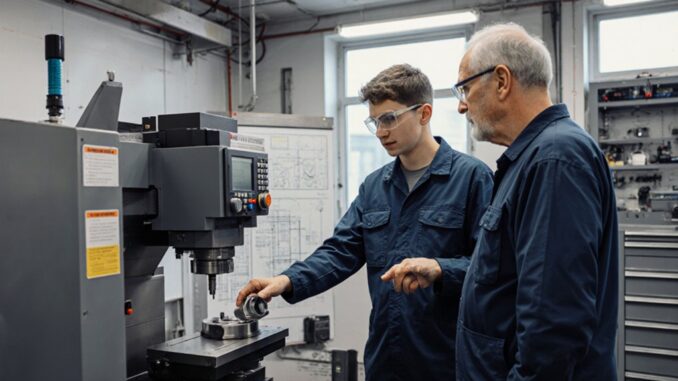
Germany’s dual vocational training system combines paid, supervised work at a company with compulsory instruction at a vocational school. Apprentices train for recognized occupations over several years, usually spending most time at work and one or two days in class, or attending school blocks. Employers provide practical training, while schools teach theory and civic subjects. Chambers oversee contracts and final examinations. Completion brings a nationally recognized qualification and progression options, with application, eligibility, pay, and scheduling details following.
What Is Germany’s Dual Vocational Training System?
Germany’s dual vocational training system combines paid, workplace-based training with structured instruction at a vocational school. It prepares trainees for recognized occupations by linking daily operational practice with standardized technical, commercial, or service-sector knowledge. Training usually occurs across several years, with schedules dividing time between a company and a Berufsschule.
Employers provide supervised work, equipment access, and progressively complex tasks aligned with national training regulations. Vocational schools deliver subjects such as occupational theory, mathematics, communication, and civic education. Chambers of commerce, industry, crafts, or other competent bodies oversee standards, register Apprenticeship contracts, and organize final examinations.
The model is designed around employer selection for defined occupational roles, ensuring that company training needs correspond with certified skill requirements. Curricula are regularly updated with input from employers, unions, and public authorities. On completion, trainees receive a nationally recognized qualification that supports entry into skilled employment and provides a foundation for further professional advancement.
Who Can Apply for Vocational Training?
Vocational training in Germany is open to school leavers, career changers, and international applicants who meet programme and employer requirements. Eligibility commonly depends on educational background, language proficiency, residence status, and the specific occupation. Applicants can enter through direct company applications, vocational schools, employment agencies, or recognised placement programmes.
Eligibility Requirements
Eligibility for vocational training in Germany depends on the chosen occupation, training pathway, and applicant’s educational and language background. Dual training employers commonly expect a school-leaving certificate, although exact standards vary by sector, company, and role. Regulated occupations, particularly in healthcare and technical fields, may require specific prior subjects, medical fitness, or recognized qualifications.
Age and nationality can affect practical conditions, especially for minors, non-EU residents, and applicants requiring residence authorization. There is generally no universal maximum age, but youth-protection rules apply to trainees under 18. German proficiency is essential for workplace instruction, vocational school, safety procedures, and examinations; many programs expect at least intermediate skills. Eligibility documents may include identity records, school certificates, qualification recognition evidence, language certificates, and health or conduct documentation where the occupation requires it.
Application Pathways
Applications for vocational training are open to school leavers, career changers, graduates, and international candidates who meet the requirements of a specific program and employer. Applicants typically apply directly to companies offering recognised apprenticeship positions, rather than enrolling only through a school. Vacancies are listed on employer websites, job portals, chambers of commerce, and employment agency platforms.
Career exploration helps candidates identify occupations matching their skills, qualifications, and language level. Most employers request application documents including a CV, cover letter, school certificates, references, and, where relevant, proof of German proficiency. Selection may involve interviews, aptitude tests, assessment days, or trial placements.
International applicants can apply from abroad, but must secure a training contract and satisfy visa conditions. Deadlines vary by sector, with many large employers recruiting several months before training begins.
How Work and Vocational School Are Split
Germany’s dual vocational training combines structured workplace practice with scheduled instruction at a vocational school. Trainees typically spend most of the week at their employer, while one or two days are allocated to classroom learning, though some programs use block-based school periods. This balance links occupational theory directly to the tasks and standards used in the workplace.
Weekly Learning Schedule
Most apprentices divide their week between practical training at a company and classroom instruction at a vocational school (Berufsschule). The exact timetable depends on the occupation, federal state, employer, and school model. Many programmes use one or two fixed school days each week, while others schedule multiweek classroom blocks several times a year.
Company training generally follows standard working hours, with apprentices completing supervised tasks linked to their recognised training regulations. School sessions cover technical theory, business processes, mathematics, communication, and occupation-specific law or safety requirements. Attendance is compulsory, and employers must release apprentices for scheduled lessons and examinations.
The timetable gives trainees a predictable route into skilled work. Career guidance services can explain programme schedules, entry conditions, and progression options, including study alternatives for those considering higher education alongside or after vocational qualifications.
Classroom and Workplace Balance
Dual vocational training divides an apprentice’s time between structured workplace practice and compulsory instruction at a Berufsschule. Most trainees spend three to four days weekly with an employer and one to two days in vocational school, although block-release models may group classroom periods into several consecutive weeks. Workplace training develops job-specific competence under supervision, using up-to-date equipment, production routines, and customer requirements. School instruction reinforces theory, mathematics, communication, economics, and occupational regulations.
Training companies coordinate schedules with schools and chambers to ensure required curriculum units and assessment preparation are covered. Apprentices remain employees during school attendance and receive training allowances throughout both settings. Student support services can assist with academic difficulties, language needs, career guidance, or personal challenges. Employer incentive programs may help firms offset training costs, particularly where sectors face skill shortages or need to expand apprentice capacity.
Who Oversees Training and Qualifications?
Oversight of vocational training in Germany is shared among the federal government, the Länder, chambers of industry and commerce or crafts, employers, trade unions, and vocational schools. This coordinated structure links national regulation with regional delivery and workplace requirements. Stakeholder Roles are defined through legislation, collective input, and formal monitoring arrangements.
- Federal authorities set training regulations, occupational profiles, and nationwide Qualification Standards for recognized apprenticeships.
- Chambers register training contracts, assess whether companies meet training requirements, advise employers, and organize final examinations through independent examination boards.
- Länder oversee vocational schools, including curricula, teacher provision, and school-based assessment, while social partners help update occupations to reflect technological and labour-market change.
Employers remain responsible for providing suitable practical instruction, qualified trainers, and approved training facilities. Trade unions represent employee interests and contribute sector knowledge during regulatory reviews. This distribution of responsibilities supports consistent credentials across Germany while allowing training content and delivery to remain connected to industry needs.
How to Apply for an Apprenticeship in Germany
With national standards and regional support structures in place, applying for an apprenticeship follows a clear employer-led process. Candidates identify suitable training occupations, research participating companies, and submit applications directly to employers. Vacancies are commonly listed on company career pages, chambers of commerce portals, the Federal Employment Agency, and specialist job boards.
The German application timeline often begins up to a year before the training start date, particularly in larger firms and competitive sectors. Applicants should monitor deadlines, as recruitment periods vary by region, occupation, and employer.
A Required document checklist typically includes a tailored cover letter, curriculum vitae, recent school certificates, and relevant internship or work references. International applicants may also need certified translations or recognition documents where requested. Employers usually assess applications through document screening, aptitude tests, online assessments, interviews, or practical trial days. Clear German-language communication, accurate documentation, and timely follow-up help candidates demonstrate reliability and readiness for workplace-based training. Applicants should retain copies and prepare for requests for additional records.
Pay, Qualifications, and Career Paths
Apprentices in Germany receive a monthly training allowance that generally rises with each training year and varies by occupation, sector, collective agreement, region, and employer. Apprenticeship contracts specify payment, working hours, leave, training content, and examination arrangements. Employers must meet defined employer responsibilities, including providing qualified instruction, necessary equipment, and time for vocational school.
- Pay: Training allowances are usually lower than skilled-worker wages but provide predictable income during qualification. Collective bargaining agreements often set minimum rates and annual increases.
- Qualifications: Successful completion leads to a nationally recognized vocational qualification, assessed through chamber examinations. This credential supports employment across Germany and, in many cases, internationally.
- Career paths: Graduates may enter skilled employment, pursue master craftsperson or technician training, attend advanced commercial programs, or progress to higher education. Many companies retain apprentices after graduation, particularly in technical, industrial, healthcare, and skilled-trades roles.

The Germany Explained Editorial Team provides accessible background information on Germany for an international audience. The team explains institutions, economic concepts and terminology that are often difficult to understand from outside the country, from the Bundestag, Bundesrat and federal states to the Mittelstand, Ausbildung, Energiewende and Industry 4.0. The objective is simple: to make Germany easier to understand.