Germany’s economy relies on export-oriented manufacturing, especially cars, machinery, chemicals, and electrical equipment. Skilled workers, technical standards, and Mittelstand firms help produce specialized, high-value goods for global markets. EU single-market access supports trade, while stable institutions encourage investment. However, aging workers, high energy costs, weak external demand, and constrained infrastructure investment pressure growth. Automation, immigration, digitalization, and green industrial upgrades will shape competitiveness ahead. The sections below explain these forces in greater detail.
How Germany’s Economic Model Works
Germany’s economic model is built around export competitiveness, advanced manufacturing, and coordination between industry, finance, labor, and government. Its core logic emphasizes high-value goods and services sold into global markets, supported by stable institutions, disciplined public finances, and long-term business investment.
The model relies on a dense network of mid-sized firms, often family owned, that specialize in narrow international niches. Banks, trade associations, vocational schools, and employer-worker bargaining systems reduce uncertainty and help firms plan over extended cycles. Regional economies contribute distinct industrial capabilities, linking local suppliers, research centers, logistics networks, and skilled workforces.
Export performance is reinforced by product quality, technical standards, and close customer relationships rather than price competition alone. Cultural resilience also matters: firms and communities tend to preserve skills, supplier ties, and industrial knowledge through downturns. This structure can sustain competitiveness, although it remains exposed to shifts in foreign demand, energy costs, trade barriers, and technological change.
How Manufacturing Drives Germany’s Economy
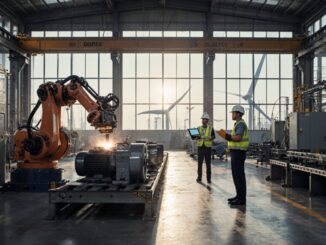
Manufacturing remains the central engine of Germany’s export economy, converting specialized engineering, skilled labor, and research capacity into high-value products for global markets. Automobiles, machinery, chemicals, electrical equipment, and industrial technologies generate substantial export revenues while supporting logistics, design, maintenance, and supplier networks across the country.
Its competitiveness depends on productivity, technical standards, reliable infrastructure, and access to international customers. EU integration gives producers a large unified market, common regulations, and cross-border production links, while Trade policy influences demand, tariffs, supply security, and market access beyond Europe. Manufacturers also face pressure to adapt production to volatile energy costs, digitalization, and shifting global competition.
The energy transition is as well an industrial issue as a climate objective: affordable low-carbon power affects investment decisions in energy-intensive sectors. Effective workforce planning is equally important, as aging demographics and skill shortages can constrain output, innovation, and export capacity.
How the Mittelstand Supports German Growth
Beneath Germany’s large industrial groups, the Mittelstand—mostly small and medium-sized, often family-owned firms—forms a broad base of specialized exporters, suppliers, and regional employers. These businesses frequently occupy narrow technical niches, producing components, machinery, software, chemicals, and industrial services that feed domestic value chains and overseas customers. Their strength lies less in scale than in accumulated expertise, long customer relationships, and disciplined investment in quality.
Family firms commonly prioritize continuity over short-term returns, supporting apprenticeship systems, local employment, and gradual capacity upgrades. Many maintain close links with larger manufacturers while also selling directly into multiple foreign markets. This diversification can improve export resilience when demand weakens in any single sector or country.
The Mittelstand also spreads industrial activity beyond major cities, sustaining production clusters in smaller towns and regions. Its contribution to growth is accordingly practical: it supplies larger exporters, develops specialized capabilities, and preserves a decentralized industrial base capable of adapting to changing orders and technologies.
Why Exports Matter to Germany’s Economy
Because domestic demand alone cannot absorb the output of its industrial base, Germany relies heavily on exports to sustain production, investment, and employment. Its manufacturers sell vehicles, machinery, chemicals, electrical equipment, and specialized components into markets where scale supports high-value production.
- Export revenue helps firms spread fixed research, engineering, and factory costs across larger sales volumes.
- Foreign orders support industrial jobs, supplier networks, logistics providers, and capital investment throughout the economy.
- Trade surplus effects can strengthen corporate balance sheets and public revenues, while also attracting external scrutiny.
This model delivers resilience when overseas markets expand, but it creates global demand dependence. Slowdowns in major customer economies can quickly reduce orders, weaken industrial output, and delay investment decisions. Exchange-rate movements, energy costs, and shifting technology standards also affect competitiveness. Export performance thus remains a central indicator of Germany’s economic health: it determines not only sales abroad, but also the operating capacity of domestic factories and their extensive supplier base.
How the EU Shapes German Trade
Germany’s export dependence is closely tied to its position within the European Union, which provides its largest and most accessible market. The single market reduces commercial friction by allowing German manufacturers to sell across member states under broadly consistent conditions. EU trade rules establish common standards for goods, competition, data, and public procurement, limiting the need to adapt products for each national market.
Tariff harmonization also simplifies cross-border pricing and protects integrated production networks from internal customs barriers. German automotive, machinery, chemicals, and electrical equipment producers benefit from supply chain access spanning Central and Eastern Europe, where components can move repeatedly before final assembly. Regulatory alignment supports scale by making compliance processes more predictable across countries. It also strengthens investment certainty, encouraging firms to locate factories, logistics centers, and research operations within the EU. While external demand remains important, European integration gives German exporters a stable regional base, lowers transaction costs, and reinforces the competitiveness of industries built on high-volume, cross-border trade.
How Skilled Workers Support the Economy
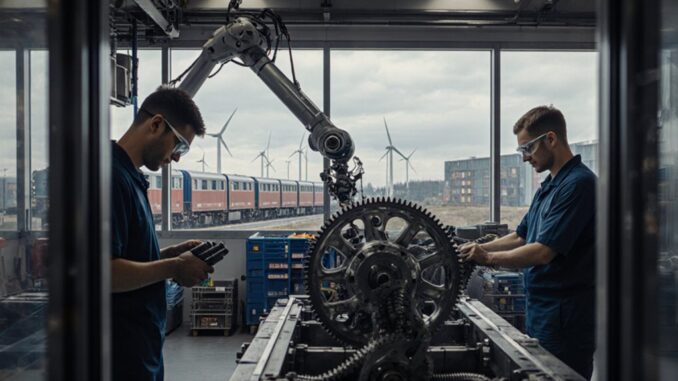
A highly trained workforce underpins Germany’s ability to produce complex, exportable goods at consistent quality and scale. Manufacturers depend on technicians, engineers, machinists, and logistics specialists who can operate advanced equipment, diagnose faults, and meet demanding delivery schedules. This capability supports sectors where reliability matters as much as price, including vehicles, chemicals, industrial machinery, and medical technology.
- Apprenticeship training links classroom instruction with paid workplace experience, supplying firms with occupation-specific skills.
- Standardized qualifications help suppliers and large exporters coordinate production methods across regional industrial networks.
- Labor stability preserves operational knowledge, reduces costly errors, and strengthens long-term relationships with international buyers.
The system also gives mid-sized firms a practical route to develop specialized talent rather than compete solely for university graduates. By embedding skills within production sites, companies can refine processes continuously and respond to export customers’ technical requirements. The result is higher value added per unit, dependable delivery performance, and a durable competitive advantage in global manufacturing markets.
How Aging Is Changing Germany’s Workforce
Demographic aging is shrinking Germany’s pool of working-age employees as large cohorts retire and fewer young entrants replace them. The pressure is especially visible in manufacturing, logistics, construction, and care services, where experienced staff underpin production reliability and export delivery schedules. Firms face higher recruitment costs, longer vacancies, and greater dependence on retaining older employees.
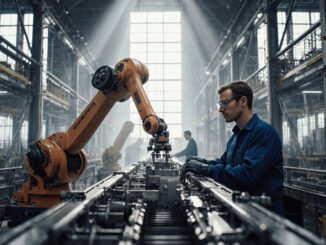
For export-oriented manufacturers, labor constraints can limit capacity even when foreign demand is strong. Companies are responding through automation replacing labor in repetitive tasks, digital production systems, and redesigned workflows that raise output per employee. These investments help preserve competitiveness but cannot quickly substitute for technicians, engineers, and specialized trades.
Healthcare staffing shortages also affect the broader economy by increasing care burdens on families and reducing labor-force participation. Immigration, training expansion, and flexible retirement policies can ease shortages, yet implementation remains uneven. Germany’s challenge is not simply replacing retirees; it is maintaining skills, productivity, and delivery capability across industries with fewer available workers.
How Energy Costs Affect German Industry
Energy costs are a central competitiveness issue for German industry because electricity and natural gas feed directly into the production costs of chemicals, metals, glass, paper, and other export-intensive sectors. When Energy prices exceed those faced by producers in the United States or Asia, German firms face narrower margins and more difficult pricing decisions in global markets.
- Energy-intensive plants have limited scope for cost pass through when customers can switch to foreign suppliers.
- Long-term power contracts, efficiency upgrades, and flexible production schedules can reduce exposure to volatile inputs.
- Persistent price gaps accelerate industrial restructuring, especially in basic chemicals, steel, and materials processing.
The effect varies by sector. Engineering companies often consume less energy directly but depend on domestic suppliers whose costs rise sharply. Exporters must therefore balance investment, output, and location decisions against reliability as well as price. Competitive outcomes depend not only on headline tariffs, but on grid charges, taxes, gas availability, and predictable policy conditions.
How Debt Rules Limit Public Investment
Germany’s constitutional debt brake constrains federal borrowing and can limit the pace of public investment in transport, digital networks, housing, and energy infrastructure. The rule reflects Germany’s preference for fiscal discipline, lower debt costs, and predictable public finances, factors valued by exporters and investors. However, budget limits can delay projects whose returns depend on coordinated, long-term funding.
For an export-oriented economy, infrastructure quality affects delivery reliability, logistics costs, electricity connections, and access to skilled labor. Rail bottlenecks, aging bridges, slow permitting systems, and uneven broadband coverage can reduce operational efficiency for manufacturers and suppliers. Federal, state, and municipal responsibilities further complicate project financing and execution.
The debt brake does not prohibit investment, but it narrows borrowing flexibility during periods of high capital needs. Policymakers must therefore prioritize projects with measurable productivity benefits, improve planning capacity, and use available funds efficiently. The central issue is not spending alone, but whether the investment pace matches industrial requirements and infrastructure maintenance demands.
Growth Risks and Opportunities Ahead
Although near-term growth faces pressure from weak external demand, high energy costs, labor shortages, and infrastructure constraints, Germany retains major strengths in advanced manufacturing, engineering, industrial software, and export finance. Its outlook depends on whether firms can preserve competitiveness while adapting production, energy sourcing, and logistics to a less predictable trading environment.
- Global supply chain shocks continue to expose dependence on imported inputs, encouraging diversification, inventory resilience, and closer European sourcing.
- Automation investment can offset demographic labor constraints, raise factory productivity, and support exports in machinery, vehicles, chemicals, and specialized equipment.
- Green transition readiness will determine access to future markets, particularly where customers demand low-carbon industrial goods and transparent supply chains.
Risks remain unevenly distributed. Energy-intensive producers face sharper cost pressure, while technology-oriented exporters can capture expanding demand. Regional growth gaps may widen between well-connected industrial hubs and areas with weaker transport, skills, or digital infrastructure. Pragmatic reforms in permitting, grids, training, and capital mobilization would improve investment conditions and strengthen export capacity over time.
The Business & Economy Editorial Team covers Germany’s economy, companies, markets and international trade. Its reporting focuses on economic developments, investment, exports, the Mittelstand, major corporations and the conditions affecting businesses in Germany. The team combines current economic news with background articles and analysis to explain what developments mean for companies, investors and international readers.