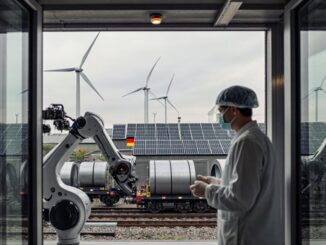
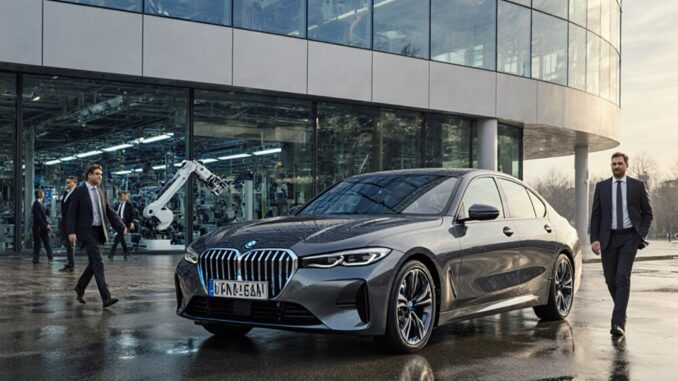
BMW is a German premium automaker founded in 1916, known for engineering-led vehicles, motorcycles, and advanced mobility technology. It matters to Germany because its plants, research centers, exports, and purchasing network support high-value industrial employment across multiple regions. BMW also drives investment in electrification, battery assembly, software, and automated driving. Its passage to Neue Klasse electric models will influence supplier capacity, manufacturing competitiveness, and Germany’s position in the global automotive market.
BMW’s Importance to Germany’s Auto Industry
BMW is a central pillar of Germany’s automotive industry, combining large-scale domestic manufacturing, high-value exports, and advanced engineering investment. Its German plants, research centers, supplier networks, and logistics operations support employment across Bavaria, Saxony, and other industrial regions. The company’s production footprint links vehicle assembly with specialized suppliers in electronics, powertrains, materials, tooling, and software, reinforcing Germany’s broader manufacturing ecosystem.
BMW’s contribution extends beyond unit output. Premium vehicles generate substantial export value, while research spending supports capabilities in electrification, battery systems, digital services, and automated driving. This investment helps sustain technical skills and demand for high-value industrial inputs. BMW brand influence also strengthens Germany’s international reputation for engineering quality and premium mobility, benefiting adjacent manufacturers and suppliers. Its regional economic impact is especially significant where plants anchor local tax bases, apprenticeships, contractor activity, and infrastructure demand. Consequently, BMW remains strategically important to Germany’s competitiveness during the automotive sector’s transition toward lower-emission, software-defined vehicles.
BMW’s Origins and Rise as a Premium Brand
The company’s present-day role in Germany’s automotive economy rests on a history that began in 1916, when Bayerische Flugzeugwerke was established in Munich and later became Bayerische Motoren Werke. Initially focused on aircraft engines, BMW shifted toward motorcycles after World War I and entered automobile production in 1928 through the acquisition of Fahrzeugfabrik Eisenach.
BMW early milestones established a pattern of engineering-led differentiation: lightweight construction, high-revving engines, and motorsport credibility. The 1930s 328 roadster reinforced its technical reputation, while the postwar period required reconstruction and strategic repositioning.
- The 1959 turnaround, supported by the Neue Klasse program, moved BMW toward profitable premium sedans.
- The 1960s “sporting saloon” formula combined performance, design, and pricing power.
- The 1972 5 Series and subsequent model families created scalable premium-market segments.
Postwar growth accordingly reflected more than volume expansion. It built a brand architecture centered on product quality, innovation, and durable margins, positioning BMW as a benchmark in Germany’s premium vehicle industry.
BMW’s German Plants, Jobs, and Exports
Across its German production network, BMW anchors high-value manufacturing employment and export capacity, with major plants in Munich, Dingolfing, Regensburg, Leipzig, Berlin, and Eisenach supporting vehicle assembly, powertrain production, components, and motorcycles. The BMW plant footprint combines long-established industrial sites with flexible production systems designed to build combustion, hybrid, and battery-electric models. Dingolfing, the group’s largest European facility, is particularly significant for premium sedans, electric drivetrains, and logistics activity, while Munich remains a central engineering and manufacturing location.
These operations employ tens of thousands directly in Germany and sustain skilled roles in engineering, production technology, software, maintenance, and administration. Their output reinforces Germany’s position in premium automotive exports: a substantial share of domestically built BMW vehicles is shipped abroad. This export market reach spreads sales exposure across Europe, North America, China, and other regions, while generating foreign revenue and supporting Germany’s trade balance. Plant modernization thus carries national importance beyond BMW’s own commercial performance.
Inside BMW’s German Supply Chain
Behind BMW’s German factories lies a dense supplier ecosystem spanning steel and aluminum, electronics, battery materials, precision components, logistics, and industrial software. Its production network links major Tier One suppliers with thousands of specialized mittelstand firms, many located near Munich, Dingolfing, Regensburg, Leipzig, and Berlin. This proximity supports just-in-time delivery, tighter quality control, and lower inventory requirements, while exposing manufacturers to transport bottlenecks and regional energy costs.
- German metalworking and machinery suppliers provide high-value castings, drivetrains, tooling, automation equipment, and engineered plastics.
- Tier One suppliers coordinate complex modules, combining inputs from smaller firms into seats, interiors, chassis systems, and electronic assemblies.
- Raw material sourcing remains strategically important because price volatility in metals, chemicals, and semiconductors affects supplier margins and vehicle costs.
BMW’s purchasing scale consequently influences investment, employment, and capacity planning well beyond its own plants. The chain’s competitiveness depends on reliable infrastructure, skilled labor, predictable regulation, and suppliers’ ability to meet demanding quality, traceability, and delivery standards.
BMW’s EV, Battery, and Software Investments
As Europe’s shift toward electrification accelerates, BMW is directing major investment toward electric-vehicle architectures, high-voltage battery systems, and software-defined vehicle platforms. Its Neue Klasse program, scheduled to underpin models from 2025, combines sixth-generation eDrive technology with cylindrical battery cells designed to improve energy density, charging speed, and production costs. BMW has committed billions of euros to battery-cell manufacturing partnerships and assembly sites, aiming to strengthen battery supply while reducing exposure to volatile raw-material markets.
EV scaling also requires adaptable factories. BMW is converting existing plants and building dedicated battery-assembly capacity rather than relying solely on greenfield production. On the software side, the group is expanding in-house development of vehicle operating systems, automated-driving functions, and over-the-air updates. These investments support software defined cars whose features can be improved after delivery. Recurring digital services, including connected navigation, charging tools, and subscription-based functions, create additional revenue opportunities while increasing data integration across the vehicle lifecycle.
BMW’s Role in Germany’s Automotive Future
BMW’s investments in electrification, batteries, and vehicle software position the company as a significant determinant of Germany’s automotive competitiveness during the industry’s restructuring. Its production decisions affect supplier capacity, engineering employment, charging infrastructure demand, and export performance. As premium manufacturers confront Chinese competition, volatile energy costs, and stricter emissions rules, BMW’s ability to scale profitable electric models will test whether German industry can retain high-value manufacturing.
- Battery-cell sourcing and next-generation platforms could strengthen domestic supply chains while reducing exposure to Asian component imports.
- Software-defined vehicles require expanded capabilities in semiconductors, data systems, cybersecurity, and artificial intelligence, shifting value beyond mechanical engineering.
- BMW’s policy influence may shape incentives, trade measures, and charging standards affecting Global mobility markets.
The company’s future role also depends on converting research spending into volume production without eroding margins. Successful localization of battery assembly and digital development would support Germany’s industrial base; slower execution could accelerate investment and innovation toward competing regions.

The German Companies Editorial Team profiles the businesses behind Germany’s economy. Coverage ranges from internationally known corporations and DAX companies to family-owned Mittelstand businesses, hidden champions, technology companies and startups. Profiles place companies within their industry, region and economic context rather than simply presenting corporate information.