Germany remains one of the world’s largest industrial economies through high-value manufacturing, export specialization, and dense European supply chains. Automotive, machinery, chemicals, and pharmaceuticals generate skilled employment and substantial trade value. The Mittelstand supplies specialized components, equipment, and industrial software, while dual training sustains technical capabilities. Research links engineering to commercialization, and automation improves productivity. Energy costs, labor shortages, and regulation create pressure, but investment in resilient, lower-carbon production supports competitiveness. The following sections explain these advantages in more detail.
Why Germany’s Industrial Economy Remains Strong
Germany’s industrial economy remains strong because it combines high-value manufacturing, export specialization, and deeply integrated supply chains. Industry contributes roughly one-fifth of national gross value added, a larger share than in many advanced economies, supporting productivity, technical exports, and supplier networks across Europe.
Its competitiveness rests on specialized firms, reliable infrastructure, research spending, and close coordination between producers, logistics providers, and vocational institutions. Workforce resilience is reinforced through apprenticeship pathways that connect employers with skilled technicians, machinists, and maintenance personnel. This structure reduces skills mismatches and helps manufacturers adapt production processes as demand changes.
Trade performance also benefits from standardized quality systems, long-term customer relationships, and efficient access to the European single market. Companies increasingly invest in sustainable production to manage energy costs, regulatory requirements, and export-market expectations. Circular manufacturing practices, including material recovery, component reuse, and waste reduction, improve resource efficiency while strengthening industrial cost control and supply security.
Germany’s Leading Industrial Sectors
Germany’s industrial base is led by automotive manufacturing, machinery and engineering, and chemical and pharmaceutical production, sectors that generate substantial export value and high-skilled employment. Automotive plants anchor integrated supplier networks, while German machinery exports serve industrial customers across global markets. Chemical and pharmaceutical producers further strengthen trade performance through high-value materials, specialty products, and regulated medicines.
Automotive Manufacturing Leadership
Automotive manufacturing remains one of Germany’s largest industrial pillars, combining high-value vehicle assembly with extensive production of engines, transmissions, electronics, and precision components. Major producers and supplier networks support large-scale output across passenger cars, commercial vehicles, batteries, software, and advanced safety systems. The sector generates substantial export revenue, with German-built vehicles and components serving markets across Europe, North America, and Asia.
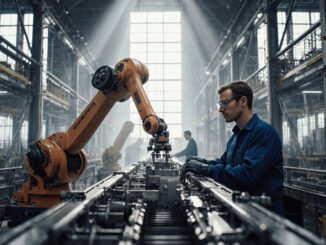
Production is increasingly shifting toward electric vehicle platforms, requiring investment in battery integration, power electronics, and localized supply chains. Robotics automation strengthens factory productivity, quality control, and flexible model production while helping manufacturers manage high labor costs. Germany’s automotive base also benefits from dense supplier clusters, skilled technical labor, and established logistics links. These capabilities sustain its position in global vehicle trade despite intensifying competition and changing emissions regulations.
Machinery And Engineering Excellence
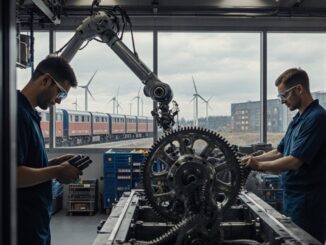
Anchored by a large Mittelstand base and global industrial groups, Germany’s machinery and engineering sector supplies machine tools, factory automation, pumps, turbines, industrial robots, and process equipment to export markets worldwide. The sector’s strength rests on specialized production clusters, high engineering standards, and close links between equipment builders, component suppliers, and industrial customers. German manufacturers compete through precision, energy efficiency, durability, and integrated digital controls rather than low-cost volume alone. Process Automation systems support manufacturers in automotive, metals, food, packaging, and electronics industries, while advanced sensors and software improve throughput and traceability. Quality Control capabilities are embedded in measuring equipment, inspection systems, and production-line monitoring. Export demand from Europe, North America, and Asia sustains scale, while service networks, spare-parts availability, and technical training reinforce long-term customer relationships across global manufacturing markets.
Chemical And Pharmaceutical Production
Chemical and pharmaceutical production forms one of Germany’s largest industrial value chains, spanning bulk chemicals, specialty materials, industrial gases, crop-protection products, active pharmaceutical ingredients, and finished medicines. Large integrated sites link refineries, crackers, polymer plants, laboratories, and logistics networks, lowering feedstock and transport costs. The sector supports high-value exports across Europe, North America, and Asia, with specialty chemicals and patented therapies contributing strongly to export earnings. Industrial collaboration between chemical producers, equipment suppliers, universities, and research institutes accelerates process optimization and product development. Pharmaceutical manufacturers combine advanced bioprocessing, sterile filling, packaging, and quality-control capacity for global markets. Regulatory compliance under EU medicines, chemical-safety, and environmental rules raises entry barriers while reinforcing product reliability. Energy costs, import dependence for selected inputs, and Asian competition remain constraints, encouraging investment in efficiency, recycling, and resilient domestic supply chains.
How Advanced Manufacturing Builds Competitiveness
Germany’s advanced manufacturing base converts engineering depth, automation, and specialized supplier networks into export competitiveness across machinery, vehicles, chemicals, and industrial electronics. High-value production relies on precision equipment, integrated software, and continuous process optimization, enabling firms to meet demanding global specifications while protecting margins.
- Digital transformation links factory data, design systems, logistics, and maintenance planning.
- Automation integration raises throughput, consistency, workplace safety, and energy efficiency.
- Industrial research supports faster commercialization of robotics, sensors, power electronics, and advanced materials.
- Export-oriented production benefits from quality certification, dense transport links, and established customer relationships.
Manufacturing competitiveness is reinforced by strong capital-goods output: machine tools, production lines, testing equipment, and control technologies also improve domestic factories. This creates cumulative productivity gains, since producers deploy equipment developed for global industrial customers. Germany’s trade position hence rests not only on finished goods, but on supplying the technologies that enable production elsewhere. High technical standards and reliable delivery performance remain central to demand in global markets.
Why the Mittelstand Matters to German Industry
The Mittelstand—typically small and medium-sized, often family-owned firms—forms a critical industrial layer between global corporations and local production networks. Its companies supply specialized machinery, precision components, industrial software, chemicals, and engineered materials that feed Germany’s export sectors. The Mittelstand structure supports long investment horizons, concentrated technical expertise, and close control over product quality, enabling firms to compete in narrow global market segments. Many are “hidden champions,” generating substantial foreign sales despite limited public visibility.
Their role extends beyond direct output. Dense regional networks connect suppliers, testing facilities, logistics providers, and larger manufacturers, reducing coordination costs and accelerating production adjustments. This structure helps automotive, mechanical-engineering, electrical-equipment, and medical-technology producers source complex inputs domestically while maintaining export reliability. Mittelstand firms also diversify Germany’s industrial base: rather than depending solely on a few multinational groups, manufacturing capacity is distributed across thousands of specialized exporters. That breadth strengthens supply chains, preserves industrial value added, and supports Germany’s position in high-value global trade.
Skilled Workers and Industrial Training
A large, technically trained workforce underpins Germany’s capacity to produce and export complex manufactured goods. The apprenticeship system links employers, vocational schools, and industry chambers, creating a steady pipeline of machinists, mechatronics technicians, toolmakers, and process specialists.
Dual vocational training combines paid workplace instruction with classroom education, aligning qualifications with factory requirements and technological standards. This model reduces onboarding time, supports quality control, and preserves production knowledge across generations.
- Apprentices receive standardized, nationally recognized certifications.
- Firms help define curricula through sectoral chambers.
- Training emphasizes precision engineering, automation, and maintenance.
- Mid-career programs update skills for digitalized production.
Germany’s manufacturing base benefits from technicians able to operate advanced machine tools, diagnose equipment faults, and document compliance procedures. Employers gain workers familiar with specific production environments, while employees obtain portable credentials. Although demographic aging and shortages in engineering-related trades create pressure, coordinated training institutions remain a significant industrial asset, sustaining productivity in capital-intensive sectors such as machinery, chemicals, vehicles, and electrical equipment.
How Exports Connect German Industry Worldwide
Germany’s industrial base is closely tied to global export markets, with machinery, vehicles, chemicals, and electrical equipment reaching customers across Europe, North America, and Asia. These shipments link domestic manufacturers to cross-border supply chains for components, raw materials, logistics, and specialized services. Export demand thus supports production scale while exposing German industry to shifts in international trade conditions.
Global Export Markets
Export markets extend German manufacturing far beyond domestic demand, with machinery, vehicles, chemicals, electrical equipment, and precision components supplied through deeply integrated trade networks. Germany’s export model relies on high-value industrial output, established customer relationships, and technical standards recognized across major importing economies. European Union markets remain central, while sales to North America and Asia broaden revenue exposure and support production scale.
- EU customers provide Germany’s largest regional market for manufactured goods.
- United States demand supports exports of machinery, vehicles, and chemical products.
- China remains important for capital equipment, automotive technologies, and industrial systems.
- Emerging market growth creates new demand for efficient production equipment.
Trade diversification strategies help manufacturers reduce dependence on individual destinations, expand access to faster-growing economies, and stabilize order books when regional demand weakens. Export performance accordinglyremains closely linked to Germany’s industrial investment capacity and international competitiveness.
Industrial Supply Chains
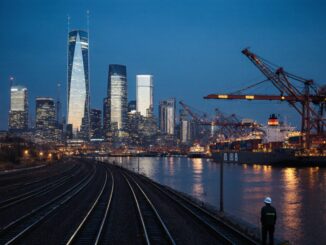
Industrial supply chains connect German factories to worldwide markets through cross-border flows of components, materials, engineering services, and finished goods. Automotive, machinery, chemicals, and electrical-equipment producers rely on tightly coordinated networks spanning European suppliers, Asian electronics manufacturers, and North American customers. German ports, rail corridors, warehouses, and customs systems support high-value exports while enabling imported inputs to reach production lines quickly. Recent disruptions in energy, semiconductors, shipping, and critical minerals have increased emphasis on resilient procurement and supplier diversification. Manufacturers are expanding dual sourcing, inventory buffers, and digital tracking to reduce interruption risks. Localization strategies place selected assembly and service operations nearer major export markets, while core engineering remains concentrated in Germany. Demand forecasting, supported by production and order data, helps firms align capacity, procurement schedules, and delivery commitments across global industrial networks.
Research, Engineering, and Industrial Innovation
Advanced research and engineering underpin Germany’s position in high-value manufacturing, linking university laboratories, applied institutes, and factory-floor production. Its industrial heritage supports specialized capabilities in machinery, chemicals, vehicles, automation, and precision equipment, strengthening export competitiveness across global supply chains.
- Fraunhofer-style applied research accelerates commercialization through pilot lines, testing centers, and industry partnerships.
- Engineering firms integrate software, sensors, robotics, and advanced materials into production machinery and components.
- Mittelstand manufacturers convert niche technical expertise into globally traded capital goods and intermediate products.
- Patent activity and vocational expertise reinforce quality standards, process reliability, and product customization.
This innovation system concentrates on incremental improvement as well as new technologies, allowing producers to maintain performance advantages in demanding industrial markets. Research networks shorten the path from prototype to serial production, while close customer relationships guide product development toward export requirements. The result is a manufacturing base capable of supplying complex equipment and engineered inputs to automotive, medical, energy, and infrastructure markets worldwide.
Energy Costs and Other Industrial Challenges
Germany’s manufacturing competitiveness faces mounting pressure from energy prices that remain high relative to several major trading rivals, particularly for electricity- and gas-intensive sectors such as chemicals, steel, glass, paper, and ceramics. Higher wholesale power costs, carbon pricing, and reduced access to pipeline gas have narrowed margins for producers competing against facilities in the United States, China, and parts of the Middle East.
The challenge extends beyond energy bills. Weak external demand, slower Chinese growth, skilled-labor shortages, elevated financing costs, and complex permitting procedures constrain capacity utilization and investment. Export-oriented manufacturers also face supply-chain volatility, trade barriers, and intensified competition in electric vehicles, batteries, machinery, and industrial equipment. Renewable integration requires more predictable generation and transmission capacity, while grid modernization remains essential for limiting congestion and regional price disparities. Energy intensive restructuring is reshaping output decisions across basic materials, with implications for domestic value chains. Maintaining industrial productivity thus depends on reliable infrastructure, competitive input costs, and efficient regulatory conditions.
How German Industry Is Adapting for Growth
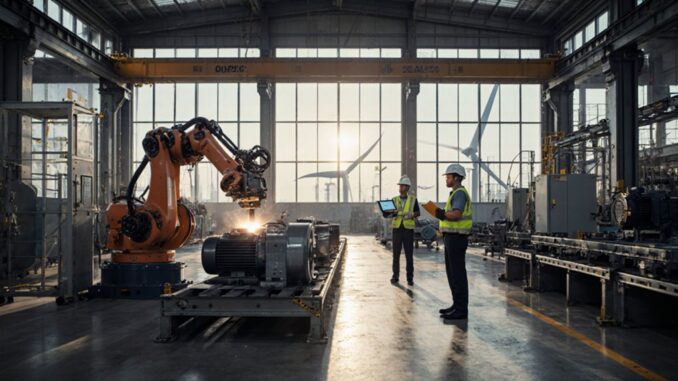
In response to cost and demand pressures, German manufacturers are reshaping operations around higher-value production, automation, and lower-carbon processes. Export-oriented firms are concentrating capital on technologies that protect margins, meet tightening EU regulations, and sustain competitiveness in machinery, vehicles, chemicals, and electrical equipment.
- Digitalization strategies are expanding predictive maintenance, industrial software, robotics, and data-led quality control across factory networks.
- Green industry investments target electrified heat, hydrogen-ready equipment, renewable power contracts, and more efficient material use.
- Suppliers are diversifying procurement and adding capacity nearer to European customers to reduce logistics exposure.
- Mittelstand companies are partnering with universities, research institutes, and larger OEMs to accelerate commercialization.
Germany’s adjustment is uneven, particularly in energy-intensive sectors, but its industrial base retains strong engineering capabilities and established export channels. Investment is increasingly directed toward specialized components, advanced production systems, and climate-compliant goods with higher global demand. This reinvigoration aims to preserve manufacturing value added while improving resilience in trade-sensitive markets.
The Industry & Manufacturing Editorial Team focuses on Germany’s industrial economy and the technologies transforming production. Coverage includes mechanical engineering, manufacturing, automation, robotics, process industries, supply chains and industrial digitalisation. Particular attention is given to the German Mittelstand, specialised manufacturers and hidden champions that play an important role in global industrial markets.