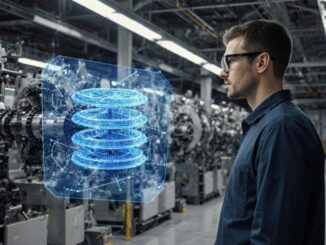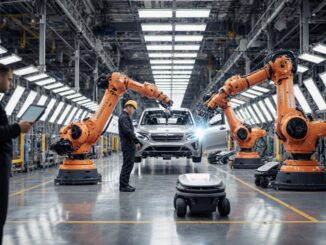
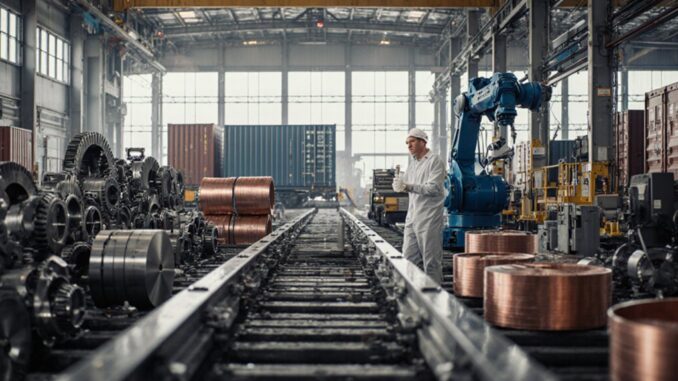
Germany’s industrial supply chains connect lead manufacturers with specialized suppliers, logistics firms, research institutes, and export markets. Automotive, machinery, chemicals, electronics, and industrial equipment drive demand for precision components and certified materials. Digital planning, traceability, technical standards, and apprenticeship-trained workers support reliable production. Global dependence on energy, metals, minerals, and semiconductors creates exposure to price volatility, sanctions, and transport disruptions. The following sections outline how these networks operate and manage risk.
Germany’s Industrial Supply Chain Model
Germany’s industrial supply chain model is built around tightly coordinated networks linking specialized small and medium-sized suppliers, major manufacturers, logistics providers, and export markets. Its operating logic emphasizes predictable quality, standardized processes, and long-term commercial relationships rather than rapid supplier substitution. Industry coordination is supported by sector associations, technical standards, regional clusters, and shared planning practices that align production capacity with demand forecasts.
Apprenticeship training supplies firms with technicians skilled in machining, electronics, maintenance, and quality control, reducing onboarding time and supporting process reliability. Export orientation increases the importance of certification, traceability, and delivery performance, particularly in automotive, machinery, chemicals, and electrical equipment.
The model also concentrates risk. Dependence on energy-intensive production, imported inputs, and external demand can expose firms to price shocks, trade disruptions, and geopolitical constraints. Resilience is contingent on inventory visibility, dual sourcing where feasible, energy diversification, digital monitoring, and disciplined contingency planning across production cycles.
Manufacturers, Suppliers, Logistics, and Research Partners
At the operational level, German industrial supply chains depend on coordinated roles across manufacturers, tiered suppliers, logistics providers, and applied-research institutions. Lead manufacturers set specifications, production schedules, quality thresholds, and traceability requirements, while Supplier Networks provide components, tooling, materials, and specialized services through multiple qualification tiers. This structure supports Small Batch Innovation by allowing prototypes and process adjustments to move from research settings into controlled production runs.
Logistics providers link plants, warehouses, ports, and cross-border routes through timed delivery, inventory visibility, customs coordination, and return flows. Their performance affects line continuity because delays in low-stock systems can quickly constrain Manufacturing Capacity. Applied-research partners contribute testing, automation methods, material validation, and production-data analysis, reducing technical uncertainty before scale-up. A Skilled Workforce remains essential across engineering, maintenance, quality assurance, and transport operations. Key risks include supplier concentration, energy disruptions, transport bottlenecks, and shortages of certified personnel. Firms manage exposure through dual sourcing, buffer inventories, supplier audits, digital tracking, and contingency planning.
Industries That Drive Germany’s Supply Chains
Automotive, machinery, chemicals, electronics, and industrial equipment form the highest-impact demand centers in German supply chains. Their production systems link tiered suppliers, specialized component makers, testing laboratories, logistics providers, and final-assembly plants through tightly scheduled flows. Automotive exports require dependable deliveries of powertrain parts, vehicle electronics, castings, interiors, and increasingly software-enabled modules. Machinery producers similarly depend on precision metals, controls, hydraulics, bearings, and engineered assemblies, often manufactured to customer-specific specifications.
Chemical exports support downstream activity in pharmaceuticals, construction materials, packaging, automotive production, and agriculture. Their supply chains emphasize batch traceability, safety documentation, quality control, and regulated transport. Electronics and industrial-equipment manufacturers add demand for sensors, semiconductors, circuit boards, automation systems, and measurement devices.
These sectors concentrate substantial purchasing power and set demanding standards for lead times, certification, and defect rates. Disruptions can propagate quickly because production is sequential and inventories are frequently optimized. Supplier diversification, validated alternatives, and transparent capacity planning thus remain central operational controls.
Global Sourcing, Energy, and Critical Materials
German industrial supply chains rely on global sourcing for energy, metals, minerals, electronic components, and chemical feedstocks that are not available domestically at sufficient scale. Procurement teams map supplier capacity, lead times, purity grades, transport modes, and inventory requirements across production networks. Diversified sourcing supports continuity while preserving cost efficiency through competitive purchasing and standardized specifications.
- Energy inputs include natural gas, oil products, electricity imports, and industrial gases used in chemicals, metals, glass, and manufacturing.
- Critical materials include lithium, cobalt, nickel, rare earths, copper, graphite, and silicon, which feed batteries, motors, semiconductors, and automation equipment.
- Control processes track origin documentation, quality certificates, customs data, export compliance, and supplier performance indicators.
Manufacturers balance just in time delivery with safety stocks for high-value or long-lead components. Supplier audits assess traceability, processing capability, environmental standards, and contractual delivery performance. Digital planning systems connect demand forecasts to purchase orders, warehouse levels, and production schedules, enabling earlier intervention when material availability or specifications change.
Energy, Trade, and Geopolitical Supply Chain Risks
Energy dependence, trade exposure, and geopolitical instability can rapidly alter the cost, availability, and delivery reliability of inputs used across German industry. Gas, electricity, petroleum products, metals, chemicals, and electronic components move through interconnected import routes, storage systems, processors, and manufacturers. Disruptions at any stage can raise lead times, constrain production schedules, or force substitution at higher cost.
Energy price volatility is particularly significant for chemicals, steel, glass, paper, and other energy-intensive sectors. Firms monitor wholesale prices, grid constraints, fuel inventories, and contract terms to forecast operating margins and procurement needs. Trade risks also include sanctions, export controls, shipping interruptions, port congestion, and currency movements affecting imported materials.
Supply security strategies increasingly combine supplier diversification, larger safety stocks, long-term energy contracts, domestic capacity investment, and detailed tier-two supplier mapping. Scenario planning assesses exposure to critical corridors and countries, while contingency plans define alternative logistics routes, approved materials, and production prioritization procedures during shortages.
The Industry & Manufacturing Editorial Team focuses on Germany’s industrial economy and the technologies transforming production. Coverage includes mechanical engineering, manufacturing, automation, robotics, process industries, supply chains and industrial digitalisation. Particular attention is given to the German Mittelstand, specialised manufacturers and hidden champions that play an important role in global industrial markets.