Germany remains an export powerhouse because goods and services exports equal roughly half of GDP, far above the U.S. share. Its automotive, machinery, chemicals, and electrical-equipment sectors combine advanced manufacturing, skilled labor, and R&D spending near 3 percent of GDP. EU single-market access connects German producers to 450 million consumers under common rules. High energy costs, Chinese competition, and supply-chain risks are growing constraints. The factors behind this resilience become clearer below.
Germany’s Export Economy by the Numbers
Germany’s export economy remains one of the world’s largest, with goods and services exports accounting for roughly half of GDP—far above the United States’ export share and comparable to other highly trade-dependent European economies. In recent years, Germany has ranked among the top three merchandise exporters globally, despite having a far smaller population than the United States or China. Its trade-to-GDP ratio exceeds those of France, Italy, and the United Kingdom, reflecting deep integration with European and global markets.
The euro area provides German firms with tariff-free access to a large regional market, while EU trade agreements broaden external reach. However, World trade trends have become less predictable, shaped by slower Chinese demand, protectionism, and geopolitical disruptions. Global supply chains have also exposed dependence on imported energy, components, and critical materials. Policy priorities accordingly include diversifying suppliers, strengthening logistics resilience, and expanding trade partnerships. Export performance remains a major source of employment, investment, and fiscal capacity, although it also leaves growth sensitive to external demand shocks.
Germany’s Leading Export Industries
Germany’s export base is led by automotive manufacturing and machinery, sectors that combine high-value production with extensive global supply chains. Chemicals and electrical equipment provide additional scale, helping diversify export earnings relative to economies more dependent on consumer goods or raw materials. Industrial policy, energy costs, and trade access accordingly remain central to maintaining competitiveness across these four export pillars.
Automotive And Machinery Exports
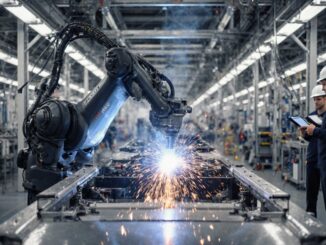
Automotive and machinery exports form the core of Germany’s industrial trade surplus, combining high-value vehicle production with capital goods used across global manufacturing. Germany competes through engineering depth, dense supplier networks, and premium positioning rather than low-cost assembly.
- Passenger vehicles remain a major export category, led by globally recognized brands.
- Machine tools, industrial robots, and production equipment serve factories worldwide.
- Supply chain resilience has gained policy importance after disruptions in critical components.
- Regulatory compliance with EU emissions, safety, and sustainability rules raises entry barriers.
Compared with lower-cost manufacturing hubs, Germany benefits from specialized Mittelstand firms and advanced research capacity. However, electric-vehicle competition and weaker external demand require continued investment in digitalization, charging infrastructure, and export-market diversification. Public policy increasingly links industrial support to climate targets, workforce skills, and strategic autonomy.
Chemicals And Electrical Equipment
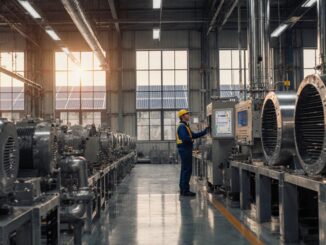
Beyond vehicles and machinery, chemicals and electrical equipment provide two major pillars of Germany’s export base. The chemicals sector, led by pharmaceuticals, specialty chemicals, and industrial inputs, benefits from dense research networks and high regulatory standards. Electrical equipment exports include automation systems, power technologies, medical devices, and precision components, supporting industrial modernization across Europe and Asia. Compared with lower-cost producers, German firms compete through quality, certification, and engineering integration rather than price alone. Policy priorities include reliable energy supplies, faster permitting, and expanded Market access through trade agreements. These measures are especially important as Asian competitors increase capacity in batteries, electronics, and chemical intermediates. Investment in diversified sourcing, strategic inventories, and domestic production capabilities strengthens Supply chain resilience. Efficient ports, rail links, and digital customs systems also reinforce Germany’s role in global logistics.
Why Buyers Trust German Exports
Buyers trust German exports because consistent product standards, reliable delivery, and strong after-sales support reduce procurement risk across industrial supply chains. This confidence is reinforced by EU product rules, rigorous certification practices, and contractual norms that make performance easier to verify than in less regulated sourcing markets. German suppliers often compete on lifecycle value rather than lowest upfront price, supporting durable brand reputation and measurable quality assurance.
- DIN and ISO standards improve cross-border specification compatibility.
- Traceable documentation helps buyers meet safety and compliance obligations.
- Established service networks limit downtime for capital-intensive equipment.
- Long-term supplier relationships support predictable spare-parts availability.
Comparatively, Germany’s export model benefits from transparent regulatory enforcement and strong intellectual-property protections, factors that matter especially in machinery, chemicals, and electrical equipment. Trade policy also supports this credibility through EU market-surveillance rules and product-liability frameworks. For procurement teams, these safeguards lower inspection costs, reduce disruption risks, and strengthen confidence in delivery commitments across major destination markets.
The Skilled Workforce Behind German Exports
Germany’s export capacity is reinforced by a dual vocational training system that combines classroom instruction with paid workplace experience, supplying industry with job-ready technicians. Compared with systems that separate academic and occupational tracks more sharply, this model helps manufacturers maintain specialized skills across production networks. Its engineering talent pipeline, supported by technical universities and applied research institutions, further sustains high-value exports in machinery, vehicles, and industrial equipment.
Dual Vocational Training
Unlike predominantly school-based training systems, Germany’s dual vocational model combines classroom instruction with paid apprenticeships, supplying export industries with a steady pipeline of technicians, machinists, mechatronics specialists, and industrial clerks. It links curricula to workplace demand through chambers, employers, and vocational schools, reducing skills mismatches common in more academically oriented systems.
- A clear Pathway to skills connects secondary education with regulated occupations.
- Industry partnerships help firms update training content around production technologies and quality requirements.
- Standardized certification enables employers nationwide to assess competencies reliably and supports worker mobility.
- A lifelong learning culture encourages retraining as export markets, regulations, and manufacturing processes change.
Roughly half of German school leavers enter vocational pathways, underpinning the Mittelstand’s capacity to maintain specialized production. Public oversight and employer co-financing distribute costs while anchoring training in real jobs.
Engineering Talent Pipeline
A deep engineering talent base converts Germany’s vocational foundation into export capacity: the country produces large cohorts of engineers and technical graduates for automotive, machinery, chemicals, electrical equipment, and industrial software. Universities of applied sciences, technical universities, and company training systems align curricula with production needs, sustaining specialization in high-value manufacturing. Workforce development is reinforced through publicly supported reskilling, research funding, and immigration reforms aimed at easing shortages in digital and engineering occupations. Industry partnerships connect firms with institutes such as Fraunhofer, accelerating technology transfer from laboratories to export-ready products. Compared with economies reliant on narrower service-sector skills, Germany maintains a denser mid-career technical workforce and stronger employer involvement in training. Demographic decline and competition for specialists remain constraints, but coordinated education and industrial policy preserve capabilities essential to complex exports.
How EU Trade Expands Germany’s Reach
Within the EU single market, German exporters gain tariff-free access to 26 partner economies, reducing transaction costs and allowing firms to serve a market of roughly 450 million consumers from a central industrial base. Common standards and streamlined customs procedures make cross-border sales less complex than trade with non-EU markets.
- EU tariff policy removes internal duties and applies a shared external tariff.
- Trade networks link German factories with suppliers, distributors, and customers across Europe.
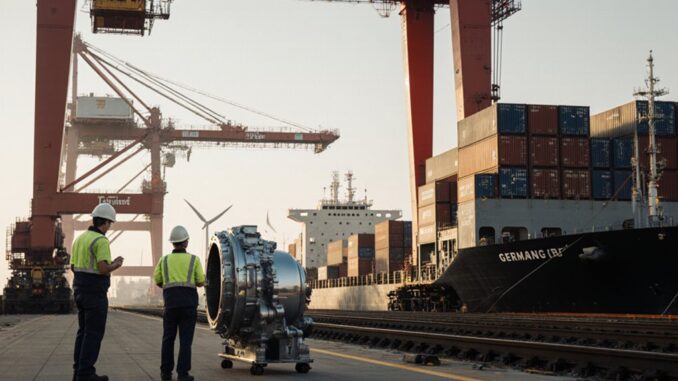
- Global logistics benefit from integrated road, rail, port, and inland-waterway connections.
- Harmonized rules support predictable contracting, product approvals, and data flows.
Germany’s central location gives it an advantage over peripheral EU economies: shipments can reach major industrial and consumer centers quickly, while firms can coordinate production across borders. The bloc also increases bargaining power in external trade negotiations, giving German companies access to markets through EU agreements rather than national deals. Compared with fragmented regional markets elsewhere, the EU offers scale, regulatory consistency, and lower administrative friction.
Innovation Keeps German Exports Competitive
Germany sustains export competitiveness through high R&D spending, advanced manufacturing, and close links between industry, universities, and applied-research institutes. Research expenditure has remained near 3 percent of GDP, above the EU average, supporting leadership in machinery, chemicals, automotive engineering, medical technology, and industrial software. The Fraunhofer network helps convert laboratory research into commercially scalable processes, while Mittelstand firms specialize in high-value components and customized equipment.
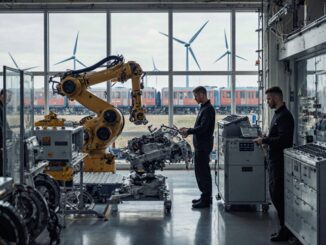
Digital manufacturing strengthens this model through automation, sensors, data analytics, and precision production. These capabilities lower defect rates, shorten development cycles, and enable product differentiation in markets where price competition is intense. Compared with many export-oriented economies, Germany derives a larger share of manufacturing value from technologically complex goods and embedded engineering services.
Policy complements innovation: market access secured through EU trade agreements broadens commercial outlets, while common standards and intellectual-property protections support investment. This combination allows German producers to compete on reliability, quality, and specialized performance rather than solely on cost.
Risks Facing German Export Competitiveness
Despite its technological advantages, German export competitiveness faces mounting pressure from high energy costs, weak global demand, and intensifying competition from China and the United States. Industrial electricity prices remain above those in major rival economies, compressing margins in chemicals, metals, and manufacturing.
- Energy costs weaken price competitiveness against US producers benefiting from cheaper gas.
- China increasingly competes in machinery, vehicles, batteries, and renewable-energy equipment.
- Trade policy uncertainty complicates investment decisions amid tariffs, subsidy disputes, and fragmented standards.
- Currency volatility can alter export pricing, although euro movements affect competitors differently.
Disruptions across the global supply chain expose dependence on imported components, critical minerals, and Asian shipping routes. Meanwhile, sustainability pressure raises compliance costs through carbon reporting, due-diligence rules, and stricter emissions targets. Germany’s policy response depends on faster grid expansion, predictable industrial-power support, diversified sourcing, and deeper EU trade agreements. Compared with the United States and China, Germany has less fiscal scope for broad subsidies, making regulatory certainty and productivity gains especially important.
The Business & Economy Editorial Team covers Germany’s economy, companies, markets and international trade. Its reporting focuses on economic developments, investment, exports, the Mittelstand, major corporations and the conditions affecting businesses in Germany. The team combines current economic news with background articles and analysis to explain what developments mean for companies, investors and international readers.