
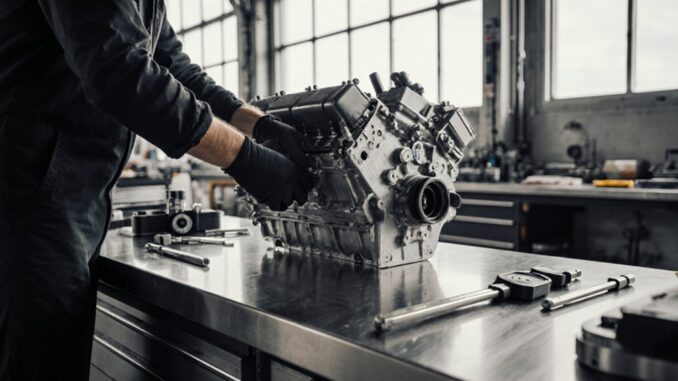
German engineering is distinguished by rigorous standards, precision manufacturing, and documented processes that control quality from design through service. Requirements are translated into measurable tolerances, safety margins, inspection methods, and traceable records. Engineers identify likely failure modes early and use testing, protective functions, and controlled revisions to prevent recurrence. Skilled production, calibrated tools, and supplier verification support consistent output across sites. The principles behind this reputation become clearer through its design, quality, and reliability practices.
What Defines German Engineering?
German engineering is defined by systematic design, rigorous testing, and close adherence to technical standards. It is recognized through products and systems built for dependable operation, measured performance, and controlled manufacturing quality. Development commonly emphasizes documented specifications, traceable materials, calibrated tools, and repeatable assembly processes.
Its craftsmanship heritage remains visible in the attention given to component fit, durability, maintainability, and finish. This tradition is applied alongside modern automation, simulation, and quality assurance methods rather than treated as a substitute for them. Manufacturers typically verify that parts meet specified tolerances before integration and evaluate completed systems under expected operating conditions.
Precision standards guide dimensions, interfaces, safety margins, and inspection procedures across sectors such as automotive production, industrial machinery, electronics, and energy equipment. The result is an engineering identity associated with consistency and long service life. Performance claims are generally supported by testing records, certification requirements, and defined acceptance criteria, helping reduce failure risks during manufacture, installation, and routine use.
Which Principles Drive German Engineering?
These defining practices are guided by principles of precision, reliability, safety, and continuous improvement. German engineering commonly treats technical work as a disciplined obligation: requirements must be clear, risks identified, and performance verified against defined limits. A Precision culture supports careful measurement, controlled tolerances, and decisions based on documented evidence rather than assumption.
Craftsmanship discipline reinforces responsibility for the integrity of each component and interface. Systems thinking considers how mechanical, electrical, software, human, and environmental factors interact throughout operation. This approach reduces the likelihood that local decisions create wider failures.
A Long term focus favors durable solutions, maintainable designs, and investments that preserve dependable operation over extended service lives. Safety first design places hazard prevention ahead of convenience, addressing foreseeable misuse, protective measures, and fail-safe behavior early in development. Continuous improvement remains essential, using operational feedback, incident analysis, and changing standards to refine engineering methods without compromising established safety margins.
How German Engineering Builds Quality
Quality is maintained through a controlled process that commences with defined requirements and continues through design, production, testing, and service. In German engineering, specifications are translated into measurable tolerances, documented procedures, and accountable responsibilities. Quality control is not treated as a final inspection step; it is embedded in each operational handoff.
- Requirements are reviewed for safety, manufacturability, and compliance before development proceeds.
- Components are measured against calibrated standards, with deviations recorded and investigated.
- Production steps follow documented methods that support repeatability across batches and facilities.
- Supplier materials undergo verification to ensure traceability and consistent performance.
This precision culture depends on disciplined documentation, trained personnel, and transparent corrective action. Inspection data informs process adjustments rather than merely identifying defective output. Long term thinking supports investments in metrology, worker qualification, and maintenance of production equipment. The result is a structured approach in which quality is verified continuously, evidence is retained, and safety-critical requirements remain visible from initial planning through customer support.
Why Reliability Is Designed In
Reliability is designed into a product through deliberate failure prevention rather than reliance on end-of-line testing. Requirements are translated into measurable limits for loads, temperatures, tolerances, materials, and operating conditions. Engineers identify credible failure modes early, then establish margins, interlocks, protective functions, and verification steps to control them.
This approach depends on operational discipline throughout development and production. Drawings, specifications, assembly methods, and inspection criteria are maintained under controlled revision. Components are tested against expected stresses, including repeated use, vibration, corrosion, and abnormal conditions where relevant. Deviations are documented, investigated, and corrected before they become recurring defects.
Safety by design is treated as a technical requirement, not an added feature. Systems are arranged to fail predictably, provide clear warnings, and limit harmful consequences when faults occur. The resulting reliability reflects consistent choices made across design, sourcing, manufacturing, and validation, with each stage supporting dependable performance over the intended service life.
How German Engineering Shapes Industry
The same design discipline extends beyond individual products and influences how entire industries define performance, safety, and production control. German engineering encourages systems in which specifications, testing, maintenance, and operator training are treated as connected responsibilities. This approach affects automotive plants, industrial machinery, medical devices, energy equipment, and transport infrastructure.
- Standardized processes reduce variation across suppliers and production sites.
- Workforce skill supports accurate assembly, inspection, troubleshooting, and documented handovers.
- Precision manufacturing enables tight tolerances, repeatable output, and reliable component interchangeability.
- Safety requirements are integrated during design, validation, installation, and service.
The industrial effect is cumulative. Manufacturers invest in measurement equipment, quality records, preventive maintenance, and certification because defects can interrupt operations or create hazards. Suppliers are expected to meet defined technical standards rather than merely deliver parts at low cost. As a result, production systems tend to prioritize durability, traceability, and controlled improvement. The model also strengthens export competitiveness by making performance measurable and service procedures predictable across international markets and regulatory environments.

The Industry & Manufacturing Editorial Team focuses on Germany’s industrial economy and the technologies transforming production. Coverage includes mechanical engineering, manufacturing, automation, robotics, process industries, supply chains and industrial digitalisation. Particular attention is given to the German Mittelstand, specialised manufacturers and hidden champions that play an important role in global industrial markets.