Germany remains an export powerhouse because high-value manufacturing accounts for roughly one-fifth of value added and supports globally competitive machinery, vehicles, chemicals, electrical equipment, and precision instruments. EU single-market access gives firms tariff-free reach to about 450 million consumers, while trade agreements expand overseas opportunities. Mittelstand specialists, vocational training, applied R&D, and strong certification sustain premium pricing. Energy costs, Chinese competition, and trade barriers pose risks, but the factors below explain its resilience.
Why Germany Remains an Export Powerhouse
Germany remains an export powerhouse because its industrial base combines high-value manufacturing, specialized engineering, and deep integration into global supply chains. Automotive, machinery, chemicals, electrical equipment, and precision instruments generate a large share of merchandise exports while sustaining dense supplier networks and skilled employment. Compared with economies centered on commodities or low-cost assembly, Germany competes through product quality, technical standards, patents, and long production relationships.
Its export capacity is reinforced by vocational training, applied research institutions, and Mittelstand firms that occupy specialized global niches. Public policy supports industrial capability through infrastructure investment, innovation incentives, export finance, and predictable regulatory frameworks. Exchange rate sensitivity remains relevant: a stronger euro can compress price competitiveness, particularly for standardized capital goods, although premium products retain greater pricing power. Trade policy alignment with major manufacturing partners also affects input availability, standards recognition, and investment certainty. Germany’s position therefore rests less on low wages than on maintaining productivity, technological leadership, and reliable industrial ecosystems amid rising energy, labor, and geopolitical costs.
EU Market Access and Global Trade Links
Beyond domestic industrial strengths, access to the European Union’s single market gives German exporters tariff-free reach to roughly 450 million consumers and integrated production networks across member states. Common rules reduce border delays, simplify certification, and enable firms to serve multiple national markets from one regulatory base. Regulatory alignment is particularly valuable in sectors subject to technical, environmental, and safety standards, lowering compliance costs relative to exporters operating across fragmented jurisdictions.
Germany also benefits from EU trade agreements that extend preferential access beyond Europe, including accords with Canada, Japan, South Korea, and Vietnam. These arrangements improve market entry conditions through reduced duties, clearer procurement rules, and stronger investment protections. Their effects vary by sector: lower automotive tariffs can support vehicle and component sales, while rules-of-origin requirements shape sourcing decisions. Compared with exporters from countries lacking comparable agreements, German firms can often face fewer tariff barriers and more predictable legal frameworks. This EU-level bargaining capacity broadens Germany’s commercial reach while reducing dependence on any single overseas destination.
Why German Manufacturing Supports Exports
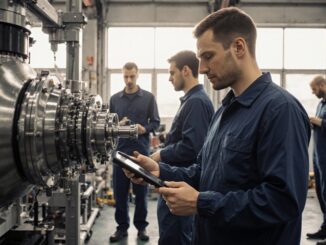
At the core of Germany’s export performance is a manufacturing base concentrated in high-value, tradable sectors such as machinery, vehicles, chemicals, electrical equipment, and precision instruments. Manufacturing contributes roughly one-fifth of gross value added, a larger share than in France, the United Kingdom, or the United States, supporting scale, specialization, and supplier networks.
- Skilled labor is reinforced through vocational training, applied research institutions, and employer-led certification.
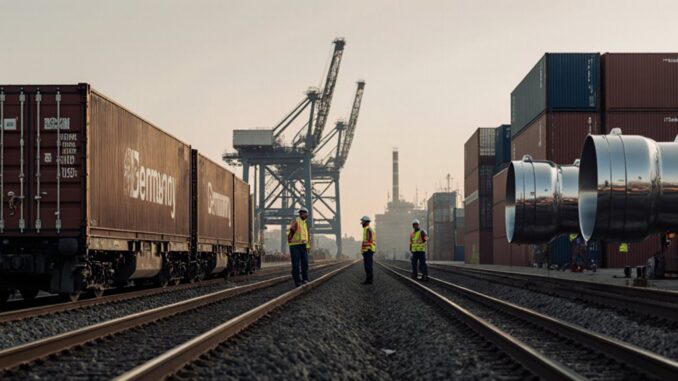
- Trade infrastructure links factories to European ports, rail corridors, and inland logistics hubs with relatively reliable delivery times.
- Market proximity to dense EU demand lowers transport costs and permits close technical service for industrial customers.
- Export regulations within the single market reduce administrative friction, while German standards and compliance systems support credibility abroad.
This structure favors complex, customized goods rather than price-based competition. Policy support for innovation, energy efficiency, and industrial modernization helps firms maintain productivity despite high wages and rising input costs. Compared with more service-led economies, Germany retains deeper production capabilities, enabling exporters to coordinate design, components, assembly, and after-sales support domestically.
Germany’s Leading Export Industries
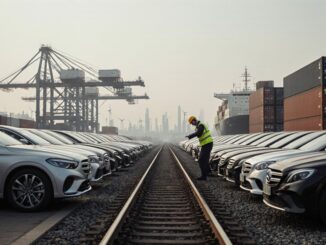
Across global markets, Germany’s export portfolio is led by vehicles and automotive components, machinery, chemicals and pharmaceuticals, electrical equipment, and medical or precision instruments. These sectors combine advanced engineering, stringent quality standards, and dense supplier networks, supporting consistently high unit values rather than reliance on low-cost volume production. Automotive exports remain central, although electrification, Chinese competition, and trade barriers are increasing pressure on established market positions.
Machinery and industrial equipment benefit from demand in manufacturing, energy, logistics, and automation, while chemical and pharmaceutical exports are reinforced by research capacity and EU regulatory alignment. Medical technology and precision instruments occupy a high value niche, serving hospitals, laboratories, and specialized industrial users worldwide. Germany is comparatively less dominant in mass-market consumer electronics, where Asian producers hold larger scale advantages. Policy priorities therefore emphasize innovation funding, export finance, resilient supply chains, and open markets. Service sector exports, including engineering, software, maintenance, and logistics, increasingly complement goods trade and extend global brand strength.
How the Mittelstand Drives German Exports
The strength of Germany’s leading export industries rests heavily on the Mittelstand: typically family-owned small and medium-sized firms that specialize in narrow, high-value market segments. These companies anchor supply chains in machinery, chemicals, components, and industrial services, giving German exports breadth beyond large multinational brands.
- Supplier precision supports demanding global manufacturers and reduces production risk.
- Customer closeness enables tailored contracts, maintenance, and long-term overseas relationships.
- Regional specialization clusters firms, skilled labor, logistics, and vocational training.
- Export durability reflects patient ownership structures and disciplined balance sheets.
Germany’s SME base compares favorably with economies more dependent on a small number of corporate champions or commodity exports. Policy frameworks reinforce this model through export-credit guarantees, chambers of commerce abroad, apprenticeship systems, and infrastructure investment. The result is a decentralized export economy: firms in smaller cities can serve international buyers while retaining local production networks. This broad industrial geography also helps spread employment and tax capacity across regions, strengthening resilience when individual sectors face cyclical downturns.
Innovation, R&D, and Export Competitiveness
Germany’s export strength is reinforced by sustained R&D investment, particularly in automotive, machinery, chemicals, and industrial automation. Compared with many advanced economies, its research base is more closely linked to manufacturing firms, supporting faster commercialization of high-value technologies. Public support for applied research, skills, and industrial clusters helps preserve competitiveness in advanced manufacturing exports.
Research-Driven Industrial Innovation
Sustained investment in research and development underpins Germany’s export competitiveness, particularly in machinery, automotive engineering, chemicals, and industrial automation. R&D spending near 3% of GDP places Germany above many European peers, supporting proprietary technologies and durable supplier networks. Government policy stability helps firms plan multiyear research programs, while export finance mechanisms reduce risk when commercializing specialized products abroad.
- Fraunhofer institutes connect applied science with industrial demand.
- Tax incentives and grants support corporate and Mittelstand research.
- Patent intensity strengthens pricing power in global niche markets.
- EU research partnerships widen access to scientific capabilities.
Compared with lower-cost competitors, Germany relies less on price and more on performance, certification, and engineering reliability. This model reinforces export resilience, though it requires continued public support for skills, digital research infrastructure, and cross-border innovation collaboration amid rising competition from China, the United States, and South Korea.
Advanced Manufacturing Exports
Research capacity is converted into export strength through Germany’s advanced-manufacturing base, which supplies high-value machinery, automation systems, precision components, chemicals, and production equipment to global industry. Manufacturing accounts for roughly 18 percent of German value added, exceeding shares in France, the United Kingdom, and the United States. Export competitiveness rests on Mittelstand suppliers, applied research institutes, and integrated engineering clusters that shorten commercialization cycles. Automation and robotics strengthen productivity while helping exporters meet customer demands for reliability, customization, and lower operating costs. Policy support for digitalization, industrial research, skilled labor, and energy-efficient production reinforces these advantages. Germany’s firms also increasingly embed sustainability compliance in machinery design, offering equipment that reduces emissions, material use, and energy consumption. This positions German capital goods favorably where environmental standards shape procurement and investment decisions.
Challenges Facing Germany’s Export Model
Germany’s export model faces pressure from industrial energy costs that remain above those in several major competitor economies, narrowing margins in energy-intensive sectors. At the same time, China’s dual role as a key market and critical supplier exposes German manufacturers to demand shifts, trade tensions, and supply-chain disruptions. Policy responses increasingly center on reliable affordable energy, supplier diversification, and reduced strategic dependence.
Energy Costs And Competitiveness
High energy prices have become a structural constraint on German industry since the loss of pipeline gas from Russia, weakening cost competitivenessingin energy-intensive sectors such as chemicals, steel, glass, and paper. German wholesale electricity and gas costs remain above pre-crisis norms and often exceed those in the United States and parts of Asia, intensifying pricing pressure on exporters.
- Energy efficiency investments reduce consumption but require capital and time.
- Temporary electricity-tax relief and grid-fee subsidies cushion selected manufacturers.
- Renewable expansion can lower marginal power costs, although transmission bottlenecks persist.
- Carbon pricing raises incentive signals while challenging trade-exposed producers.
Compared with US firms benefiting from cheaper gas, German producers face narrower margins and stronger incentives to shift production abroad. Policy accordingly centers on accelerating grids, permitting, storage, and predictable industrial-power contracts, rather than broad, permanent subsidies.
China Dependence And Supply Chains
Beyond energy costs, exposure to China has become a second structural vulnerability for German exporters. China remains a major destination for German cars, machinery, and chemicals, but weaker Chinese growth and stronger local competitors have reduced prospects for Stable Demand. Supply-chain risks are equally significant: disruptions in Asian components, critical minerals, or shipping routes can constrain production across Germany’s industrial base.
Compared with firms in more domestically oriented economies, German manufacturers face greater sensitivity to external market shifts. Policy responses increasingly emphasize Diversified Suppliers, strategic reserves, and sourcing within Europe or partner economies. Global Partnerships with India, ASEAN states, and North America can broaden export markets while securing inputs. Targeted Foreign Investment may support production networks abroad, but policymakers must balance resilience goals against costs, regulatory fragmentation, and the efficiency gains historically delivered by China-centered trade.

The Automotive & Mobility Editorial Team follows one of Germany’s most important industries and its transformation. Coverage ranges from automotive manufacturers and suppliers to electric vehicles, batteries, automotive software, autonomous driving, rail, logistics and new mobility concepts. The team examines both established German mobility companies and the technologies that could shape transportation in the future.