Industry 4.0 in Germany refers to digitally connected manufacturing using cyber-physical systems, IIoT sensors, cloud platforms, AI, and real-time analytics. Factories link machines, products, warehouses, and enterprise software to automate decisions, improve traceability, and optimize output. Germany’s industrial base, vocational training, research institutes, and standards initiatives support adoption. Key gains include productivity, quality, flexibility, predictive maintenance, and resource efficiency. Its implementation, policy framework, and adoption barriers reveal how this transformation operates in practice.
What Industry 4.0 Means in Germany
In Germany, Industry 4.0 refers to the integration of cyber-physical systems, industrial Internet of Things (IIoT) networks, cloud platforms, artificial intelligence, and real-time data analytics across manufacturing and logistics operations. It describes an operating model in which machines, products, warehouses, and enterprise systems exchange standardized data continuously, enabling automated decisions and traceable production flows.
The concept targets higher productivity, flexibility, quality control, and resource efficiency through connected value chains. Sensor data can support predictive maintenance, digital twins can simulate process changes, and AI models can optimize scheduling, energy use, and inspection accuracy. Legacy industrial transformation is not limited to equipment replacement; it requires interoperable architectures, secure connectivity, workforce capabilities, and governance for operational data.
Mittelstand modernization applies these principles to specialized manufacturers, often linking existing machinery with modular software and edge devices. Success is measured through indicators such as downtime reduction, throughput improvement, defect rates, lead times, inventory visibility, and energy intensity across production networks.
Why Germany Leads Industry 4.0 Adoption
Germany’s leadership in Industry 4.0 adoption stems from its advanced manufacturing base, export-oriented industrial structure, and coordinated ecosystem of firms, research institutes, standards bodies, and public programs. Manufacturing contributes roughly one-fifth of German gross value added, creating strong incentives to improve productivity, quality, resilience, and global competitiveness across industrial supply chains.
The Mittelstand mindset supports long-term investment, specialization, and close customer relationships, enabling medium-sized manufacturers to pursue modernization without solely prioritizing short-term returns. Germany’s dual vocational training system supplies technically qualified workers whose skills align with production requirements, while universities and Fraunhofer-style institutes expand applied research capacity. Structured technology transfer converts research results into commercially deployable industrial capabilities through regional clusters, pilot facilities, and industry partnerships. National initiatives also align funding, interoperability requirements, cybersecurity guidance, and workforce development. This coordinated model reduces implementation risk, spreads expertise beyond large corporations, and strengthens Germany’s ability to scale industrial change across sectors and supplier tiers.
Industry 4.0 Technologies in German Factories
German factories deploy smart automation to increase throughput, stabilize quality, and reduce unplanned downtime. Industrial Internet platforms connect machines, sensors, and enterprise systems, enabling real-time production data exchange and predictive maintenance. Digital twins further support simulation, process optimization, and faster validation of equipment and manufacturing changes.
Smart Factory Automation
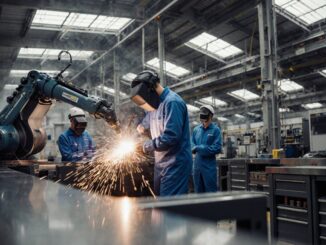
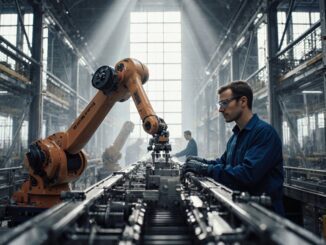
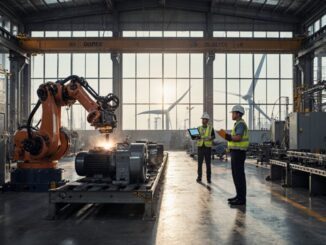
Smart factory automation forms the operational core of Industry 4.0 in German manufacturing, integrating connected sensors, programmable logic controllers, industrial robots, machine vision, and manufacturing execution systems into unified production networks. These systems automate repetitive assembly, quality inspection, material handling, and process adjustment while generating real-time operational data for plant-level decisions. Automated cells can improve throughput consistency, reduce defect rates, and shorten changeover times across automotive, machinery, chemical, and electronics production. German manufacturers increasingly deploy collaborative robots and adaptive control software where product variants and batch sizes require flexibility. Implementation depends on standardized equipment interfaces, reliable data governance, and Cybersecurity readiness within operational technology environments. Workforce redesign is equally significant: technicians require skills in robot programming, diagnostics, controls engineering, and data interpretation. Strategic automation roadmaps thus align capital expenditure with measurable productivity, quality, safety, and resilience targets.
Industrial Internet Integration
Industrial Internet integration connects machines, sensors, enterprise applications, and external service platforms through interoperable data architectures, enabling German factories to coordinate production decisions across operational and information technology layers.
- Edge connectivity filters machine data near production assets, reducing latency and preserving bandwidth for time-sensitive control signals.
- Standardized interfaces, including OPC UA and MQTT, enable secure exchange between PLCs, manufacturing execution systems, ERP platforms, and supplier networks.
- Scalable cloud systems consolidate selected operational datasets for fleet-level analytics, capacity planning, and cross-site performance benchmarking.
German manufacturers prioritize segmented networks, identity management, and encrypted communications to protect industrial assets. Integration programs typically track data availability, transmission latency, interface reliability, and cybersecurity incidents. These metrics help organizations quantify interoperability gains, identify bottlenecks, and align investments with productivity, quality, and resilience objectives across distributed manufacturing operations.
Digital Twin Applications
Digital twins create continuously updated virtual representations of machines, production lines, and facilities by combining engineering models with live sensor, control, and operational data. In German factories, these models support predictive maintenance, throughput optimization, energy management, and virtual commissioning before physical equipment changes occur. Digital twin use cases enable manufacturers to test parameter adjustments, identify bottlenecks, and quantify quality risks without interrupting production. Edge computing integration processes high-frequency machine data near the source, reducing latency and limiting unnecessary cloud transfers. This architecture supports near-real-time anomaly detection for robotics, CNC systems, and automated logistics. Engineers can compare actual performance against simulated baselines, improving root-cause analysis and maintenance scheduling. At scale, connected twins provide standardized operational visibility across plants, helping firms prioritize capital investment, reduce downtime, and validate process improvements using measurable production, cost, and energy indicators.
How German Manufacturers Implement Industry 4.0
German manufacturers typically implement Industry 4.0 through phased modernization of production assets, data infrastructure, and workforce processes rather than full factory replacement. Programs usually begin with baseline assessments of machine connectivity, data quality, cybersecurity exposure, and operational bottlenecks. Pilot lines validate interoperability before technologies are scaled across sites.
- Connect equipment: Legacy machines receive sensors, edge gateways, and standardized interfaces such as OPC UA. Data is routed to manufacturing execution systems or cloud platforms with defined ownership rules.
- Prioritize use cases: Plants select measurable applications, including condition monitoring, automated quality inspection, and production scheduling. Investment decisions rely on cycle-time, scrap-rate, availability, and energy-consumption baselines.
- Govern deployment: Cross-functional teams coordinate IT, operations, engineering, and compliance. Change management addresses role redesign, training schedules, and adoption metrics, while supplier integration aligns component data, delivery signals, and interface specifications.
Implementation roadmaps commonly use stage gates, cybersecurity reviews, and performance dashboards to control technical risk and maintain consistent standards across production networks.
Benefits for German Businesses and Workers
For German businesses, Industry 4.0 increases productivity and competitiveness through connected production data, automation, and faster operational decisions. For workers, it expands demand for digital, analytical, and maintenance capabilities, making targeted upskilling a core workforce requirement. Collaborative robotics, predictive monitoring, and flexible production systems also support safer workplaces and more adaptable job structures.
Productivity and Competitiveness Gains
Industry 4.0 raises productivity by integrating connected machines, sensors, data platforms, and automation into manufacturing and logistics workflows. German firms can reduce downtime, shorten lead times, and improve asset utilization through continuous operational visibility. Data driven planning aligns production capacity, inventory, and supplier schedules with changing demand.
- Predictive maintenance detects equipment anomalies early, limiting unplanned stoppages and maintenance costs.
- Real time optimization adjusts machine settings, routing, and energy consumption based on live performance data.
- Digital quality control identifies defects during production, reducing scrap, rework, and warranty exposure.
These capabilities strengthen cost efficiency while supporting consistent output in high-value sectors such as automotive, machinery, chemicals, and electronics. Faster response cycles also improve delivery reliability and customization capacity, helping German manufacturers defend margins against lower-cost competitors and volatile global supply conditions. Digital twins further enable tested process changes before implementation.
Skilled Jobs and Upskilling
As Industry 4.0 expands, demand shifts toward roles that combine manufacturing expertise with data analytics, automation, cybersecurity, and software integration. German firms benefit by building capabilities for predictive maintenance, digital twins, industrial cloud platforms, and connected production systems. This workforce transformation increases the strategic value of technicians, engineers, and production specialists able to interpret operational data and configure automated equipment.
Germany’s dual vocational training model provides a scalable foundation for reskilling, but curricula increasingly require modules in programming, sensor technology, AI applications, and OT security. Companies that align training investments with production-roadmap requirements can reduce skills gaps, accelerate technology adoption, and retain institutional knowledge. For workers, certified digital competencies improve mobility across advanced-manufacturing roles and support progression into higher-value technical positions. Industry, unions, schools, and regional training centers hence remain central to maintaining Germany’s industrial talent pipeline.
Safer, More Flexible Workplaces
Connected production systems can improve workplace safety by shifting workers away from hazardous, repetitive, or ergonomically demanding tasks while providing real-time visibility into equipment conditions and operational risks. For German manufacturers, sensors, robotics, and digital twins support Human safety objectives while maintaining throughput across variable production schedules.
- Predictive maintenance flags abnormal vibration, temperature, or pressure before failures create injury exposure or unplanned downtime.
- Collaborative robots handle lifting, welding, and material movement, enabling workers to supervise processes, resolve exceptions, and rotate between tasks.
- Digital work instructions and compliance training platforms standardize procedures, document certifications, and deliver updates across sites.
Flexible, data-enabled operations can also support hybrid engineering roles and faster redeployment during demand changes. Measurable safety indicators, including near-miss rates, ergonomic incidents, and machine stoppages, give managers evidence for targeted investments and continuous improvement.
Germany’s Industry 4.0 Policies and Standards
Germany’s Industry 4.0 framework is anchored in coordinated federal policy, applied research, and interoperable technical standards designed to accelerate digital manufacturing adoption. Policy collaboration connects federal ministries, Länder, industry associations, research institutes, and standards bodies through initiatives such as Plattform Industrie 4.0. Its objective is to translate strategic priorities into scalable reference architectures, cybersecurity requirements, workforce guidance, and implementation roadmaps.
Technical governance relies heavily on RAMI 4.0, which structures industrial assets, lifecycle stages, and communication layers for consistent system integration. The Asset Administration Shell supports standardized digital representations of equipment, enabling machine-readable data exchange across suppliers and production networks. DIN, DKE, VDI, and international partners contribute specifications that reduce interoperability barriers and improve investment certainty.
EU alignment is equally significant. German policy interfaces with the EU Data Act, Cyber Resilience Act, NIS2, AI Act, and digital product passport initiatives. This alignment helps manufacturers meet cross-border compliance requirements while strengthening data sovereignty, security, and single-market interoperability.
Industry 4.0 Examples From German Companies
German companies demonstrate Industry 4.0 through production systems that combine connected equipment, real-time data analytics, digital twins, and automated quality control. These deployments convert factory data into faster decisions, higher asset utilization, and traceable product records across value chains.
- Siemens applies digital twins and industrial IoT platforms to simulate production lines, monitor equipment conditions, and optimize energy and throughput before physical changes are implemented.
- Bosch connects sensors, machines, and logistics systems in smart factories, using predictive-maintenance models to reduce unplanned downtime and machine-learning inspection to identify defects during assembly.
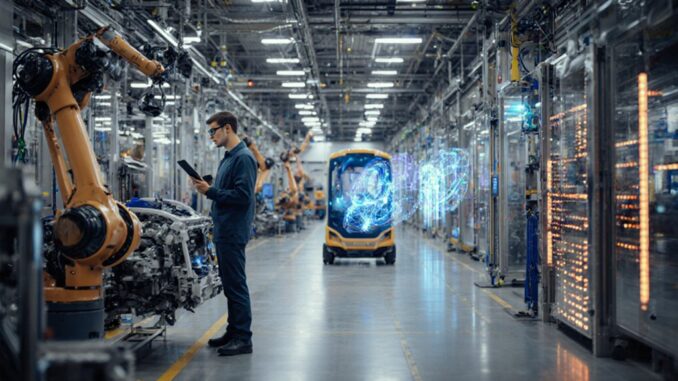
- BMW integrates autonomous transport systems, data-driven scheduling, and flexible robotics within vehicle plants. Data interoperability supports coordination among suppliers, production cells, and enterprise planning systems, enabling more responsive configuration management.
Across these examples, Cybersecurity priorities are embedded in network segmentation, identity management, and secure industrial communications. The strategic objective is not automation alone: it is a continuously measured operating model where operational technology and business data improve quality, speed, and resource efficiency.
Challenges to Industry 4.0 Adoption in Germany
Despite proven deployments at firms such as Siemens, Bosch, and BMW, Industry 4.0 adoption remains uneven across Germany’s industrial base. Large manufacturers can fund cloud platforms, industrial IoT sensors, digital twins, and specialized data teams, while many Mittelstand firms face constrained capital, limited IT capacity, and uncertain return-on-investment models.
Legacy machinery creates costly interoperability problems because equipment often uses proprietary protocols and lacks standardized data interfaces. Cybersecurity gaps further slow connected-factory projects: each additional endpoint expands the attack surface, requiring network segmentation, identity controls, monitoring, and incident-response capabilities that smaller firms may not possess.
Skills shortages compound the challenge. Demand for automation engineers, OT-security specialists, data scientists, and software architects exceeds available supply, delaying implementation and reducing operational confidence. Supply chain integration also remains difficult where suppliers differ in digital maturity, data governance rules, and system compatibility. Regulatory requirements, including GDPR compliance and sector-specific standards, add documentation burdens. Consequently, adoption decisions frequently prioritize incremental retrofits over enterprise-wide transformation.
The Future of Industry 4.0 in Germany
Although adoption barriers will persist, the next phase of Industry 4.0 in Germany is likely to shift from isolated pilot projects toward interoperable, AI-enabled production ecosystems. Growth will depend on common data standards, secure cloud-edge architectures, and investment models that connect Mittelstand suppliers with larger industrial platforms.
- Scaled digital twins: Manufacturers are expected to use real-time simulation for predictive maintenance, energy optimization, and faster product changeovers, reducing downtime and material waste.
- Data driven planning: Integrated operational, supply-chain, and market data should improve demand forecasting, inventory allocation, and resilience against logistics disruptions. Measurable performance indicators will increasingly guide capital deployment.
- Workforce transformation: Demand will rise for technicians and engineers who can operate automated cells, interpret analytics, and manage cybersecurity risks. Vocational training, university partnerships, and continuous reskilling will become strategic infrastructure.
Germany’s future advantage will rest on converting engineering expertise into scalable digital services. Firms that combine trustworthy data governance with automation and human capability development are positioned to strengthen productivity, export competitiveness, and industrial resilience.
The Industry & Manufacturing Editorial Team focuses on Germany’s industrial economy and the technologies transforming production. Coverage includes mechanical engineering, manufacturing, automation, robotics, process industries, supply chains and industrial digitalisation. Particular attention is given to the German Mittelstand, specialised manufacturers and hidden champions that play an important role in global industrial markets.