Apprenticeships matter to German business because the dual system builds skilled workers around real operational needs. Employers train apprentices on company equipment while vocational schools provide technical theory and regulations. Chambers oversee standards and examinations. This creates job-ready talent, helps firms plan for retirements and technology shifts, and reduces recruitment, onboarding, and replacement costs. It also strengthens regional labor pipelines and digital capability. The sections below show how these advantages work in practice.
How Germany’s Dual Apprenticeship System Works
Germany’s dual apprenticeship system combines paid workplace training with structured vocational education, allowing apprentices to develop job-ready skills while earning recognized qualifications. Employers sign training contracts, pay apprentices wages, and deliver supervised practical assignments aligned with nationally defined occupational standards. Apprentices typically divide their week between company operations and vocational schools, where they study technical theory, regulations, mathematics, communication, and trade-specific processes.
Industry chambers, including the Chambers of Commerce and Industry and Chambers of Crafts, oversee training quality, register contracts, and organize final examinations. This shared governance gives businesses influence over curriculum requirements while preserving consistent standards across regions. Companies can tailor workplace training to their equipment, customers, and workflows without abandoning the common framework.
Programs usually last two to three and a half years, depending on the occupation and prior education. Successful candidates receive nationally portable credentials, often supplemented by industry certificates, that signal verified competence to employers. The system consequently links corporate participation, formal instruction, and independent assessment.
How German Apprenticeships Build Job-Ready Talent
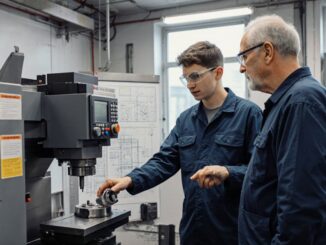
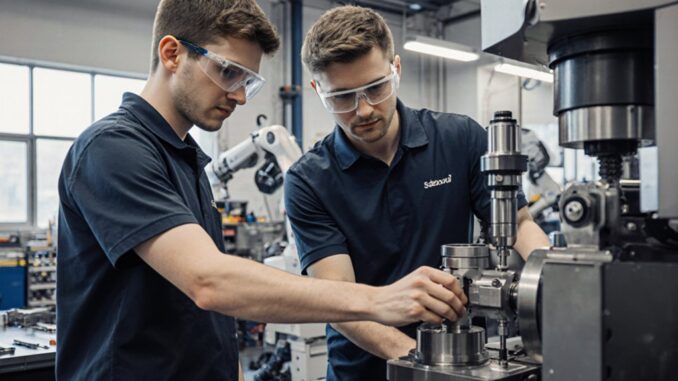
This structure produces job-ready talent by placing apprentices in real operating environments from the outset. Rather than learning only through simulated assignments, participants apply technical knowledge within production lines, service teams, laboratories, and commercial functions. Employers gain workers familiar with their standards, equipment, workflows, and safety requirements before full employment begins.
- Hands on training develops reliable task execution under normal workplace conditions.
- Rotations expose apprentices to connected processes, from planning and quality control to delivery.
- Supervisors provide immediate feedback, enabling apprentices to correct errors and refine professional judgment.
- Industry collaboration keeps training content aligned with current technologies, regulations, and operational practices.
The result is a workforce entering roles with practical competence, workplace discipline, and awareness of performance expectations. Apprentices also learn how individual responsibilities affect output, customer service, compliance, and cost control. For German businesses, this shortens onboarding, supports consistent quality, and creates clearer pathways from training into productive employment.
How German Apprenticeships Close Skills Gaps
By aligning training capacity with employer demand, German apprenticeships help businesses address persistent shortages in technical, industrial, digital, and service occupations. Companies define required competencies with vocational schools and chambers, ensuring curricula reflect current equipment, processes, regulations, and customer expectations. This structured collaboration improves workforce alignment in regions where specialized capabilities are scarce.
Apprenticeships also create reliable pathways into occupations affected by demographic change, retirements, and evolving technology. Manufacturers can develop mechatronics, automation, and maintenance expertise; IT firms can strengthen software, systems, and cybersecurity capabilities; service employers can build qualified operational teams. Training standards provide transferable foundations while allowing firms to emphasize sector-specific applications.
For business leaders, the model supports forward-looking capacity planning. Employers can identify emerging skills shortages, forecast future roles, and adjust apprentice intake accordingly. The result is a more responsive talent pipeline that connects local labor-market needs with recognized qualifications, helping German industries maintain production capacity, service quality, innovation, and competitiveness.
How Apprenticeships Lower Hiring and Turnover Costs
German apprenticeships reduce recruitment expenses by developing candidates internally for defined operational roles. They also strengthen retention, as trainees who enter through structured programs are more likely to remain with employers that invested in their development. By limiting turnover and the need to retrain external hires, firms lower replacement costs while preserving workforce continuity.
Reduced Recruitment Expenses
Apprenticeships reduce recruitment expenses by creating a reliable internal pipeline of workers trained for specific roles, processes, and company standards. Rather than repeatedly competing for scarce external talent, German firms can convert qualified trainees into productive employees with clearer cost predictability and stronger workforce planning.
- Advertising and agency fees decline when vacancies are filled internally.
- Screening time falls because supervisors have already assessed trainees’ technical capability and workplace conduct.
- Onboarding costs decrease, as apprentices understand safety rules, equipment, digital systems, and quality procedures.
- Vacancy-related disruption is limited through planned training intakes aligned with projected skill demand.
This model is particularly valuable in manufacturing, engineering, logistics, and skilled trades, where external searches can be lengthy and expensive. Apprenticeship investment thus functions as a controlled recruitment channel, supporting operating continuity while reducing dependence on volatile labor markets.
Better Employee Retention
Beyond lowering recruitment expenditure, structured apprenticeship pathways strengthen employee retention by building early attachment to the employer, work team, and occupational standards. Apprentices gain familiarity with processes, supervisors, safety expectations, and customer requirements before assuming permanent roles. This continuity improves Onboarding stability, reducing the disruption often associated with external hires who must adapt quickly to established operations.
For German businesses, retention benefits are especially relevant in skilled trades, manufacturing, logistics, and technical services, where vacancies can affect output and service quality. Apprentices who see credible progression opportunities, receive consistent mentoring, and contribute to real work are more likely to develop long term commitment. Employers consequently face fewer repeat hiring cycles, lower vacancy-related productivity losses, and stronger workforce planning. A retained former apprentice also preserves team knowledge, supports dependable staffing levels, and reinforces organisational culture across operational units.
Lower Training Replacement Costs
By developing talent internally, firms can reduce the high costs associated with replacing skilled employees, including advertising vacancies, recruiter fees, screening, interviews, temporary cover, and initial productivity shortfalls. German apprenticeships create a predictable pipeline aligned with operational needs, improving workplace retention and preserving institutional knowledge.
- Structured learning shortens onboarding for technical roles.
- Mentoring supports competency transfer before experienced staff retire.
- Early performance data enables better placement decisions.
- Long-term contracts reduce repeated recruitment cycles.
For manufacturers, logistics providers, and service firms, these savings extend beyond HR budgets. Stable teams experience fewer disruptions, supervisors spend less time retraining replacements, and production quality remains more consistent. Apprentices also become familiar with company equipment, standards, and customer requirements during training. This lowers the risk and expense of external hires who may require extensive adaptation or leave before generating full value.
How Apprenticeships Support Digital Innovation
As German companies modernize operations, apprenticeships provide a practical pipeline for developing digital capabilities in areas such as automation, data analysis, cybersecurity, and advanced manufacturing. Structured workplace learning allows apprentices to apply emerging technologies within production, logistics, engineering, and service environments while gaining familiarity with operational standards and compliance requirements.
By integrating Digital toolchains into apprenticeship curricula, employers can build proficiency in cloud platforms, connected equipment, enterprise software, and digital quality-control systems. This approach supports workforce upskilling without separating learning from business priorities. Apprentices can contribute to AI pilotprojects by preparing data, testing workflows, documenting results, and identifying implementation issues under experienced supervision.
The model also improves technology adoption because digital skills are developed alongside process knowledge. Companies gain employees who understand both systems and operational constraints, reducing friction between technical teams and frontline functions. Better-aligned capabilities can support productivity acceleration, faster problem resolution, and more reliable deployment of digital investments across core business processes.
How Apprenticeships Build Regional Talent Pipelines
Apprenticeships strengthen local skills networks by linking employers, vocational schools, and regional institutions around defined workforce needs. They give businesses a direct route to develop job-ready talent for local industries and supply chains. By creating clear career pathways close to home, they also help regions retain skilled workers and support long-term economic capacity.
Strengthening Local Skills Networks
Germany’s apprenticeship system strengthens local skills networks by linking employers, vocational schools, chambers, and trainees around regional labor-market needs. It converts workforce planning into coordinated action, allowing industries to define relevant competencies and update training as technologies, regulations, and customer requirements evolve.
- Employers communicate occupational demand and provide workplace instruction.
- Vocational schools align curricula with sector-specific technical foundations.
- Chambers set quality standards, certify training capacity, and coordinate examinations.
- Regional partnerships connect smaller firms to shared training resources and specialist expertise.
These collaboration networks reduce fragmentation in local labor markets. They help manufacturers, logistics providers, construction firms, and service businesses access training structures that would be difficult to maintain independently. By pooling intelligence and responsibilities, local stakeholders can respond more quickly to skill shortages, equipment changes, and emerging occupational profiles across regional value chains.
Retaining Talent in Regions
By connecting training directly to local employers and career opportunities, the dual system gives young people a credible reason to begin and build their working lives in their home regions. For businesses facing demographic decline and skills shortages, apprenticeships create predictable recruitment channels tied to local demand. Local employer partnerships with vocational schools, chambers, and municipalities can align curricula, placements, and mentoring with sector-specific needs in manufacturing, care, construction, and digital services. Rural retention schemes can reinforce this pipeline through housing support, transport access, and progression pathways into specialist roles or further qualifications. The result is lower turnover, reduced recruitment costs, and stronger operational continuity. Rather than competing solely for experienced workers in national labour markets, regional firms can develop talent early, retain institutional knowledge, and sustain local economic capacity.
How Companies Can Build Apprenticeship Programs
A successful apprenticeship program begins with a clear assessment of the roles, skills, and workforce gaps a company expects to face. German firms can then align recruitment, instruction, and certification with operational priorities, while securing Employer buy in from executives, supervisors, and employee representatives.
- Define target occupations and forecast demand by site, department, and technology roadmap.
- Partner with vocational schools, chambers, and training providers to establish compliant training standards and examination pathways.
- Assign qualified mentors, protect time for instruction, and rotate apprentices through relevant production, service, or technical functions.
- Measure completion rates, competency outcomes, retention, and supervisor feedback to refine the model annually.
A disciplined program also requires a realistic budget covering wages, equipment, mentor capacity, and administration. Companies benefit when apprentices contribute progressively to productive work without replacing fully trained staff. Clear selection criteria, transparent progression routes, and post-completion employment prospects strengthen participation and help firms build reliable local talent pipelines.

The Business & Economy Editorial Team covers Germany’s economy, companies, markets and international trade. Its reporting focuses on economic developments, investment, exports, the Mittelstand, major corporations and the conditions affecting businesses in Germany. The team combines current economic news with background articles and analysis to explain what developments mean for companies, investors and international readers.