
Germany’s chambers of commerce, especially IHKs, are statutory self-governing bodies representing regional business interests while performing public-law functions. They advise firms, administer vocational-training examinations, register training contracts, issue trade documents, and provide export and compliance guidance. Membership and fees generally apply to eligible businesses within each jurisdiction. HWKs serve crafts, while AHKs support international commerce. Together, the chamber system links business participation with standardized qualifications, regulatory administration, and economic policymaking. Further sections explain each function in detail.
What Germany’s Chambers of Commerce Do
Germany’s Chambers of Commerce and Industry (Industrie- und Handelskammern, IHKs) serve as legally mandated self-governing bodies for most commercial enterprises, combining business representation with delegated public-administration functions. Their core role is to aggregate regional economic interests and translate them into evidence-based positions for legislators, regulators, and municipal authorities. Through Business advocacy and structured policy dialogue, they identify barriers affecting investment, trade, skills development, infrastructure, and administrative efficiency.
IHKs also perform statutory tasks intended to support market reliability and workforce quality. These include administering vocational-training examinations, maintaining certain commercial registers, issuing certificates of origin and other trade documents, and providing expert assessments in selected regulatory procedures. Their advisory services inform firms about compliance, internationalization, start-up requirements, financing, and operational challenges. By linking company-level experience with public decision-making, the chambers contribute to implementation-oriented economic policy. Their institutional mandate requires them to represent the overall interest of the regional economy rather than individual firms or sectoral preferences.
Germany’s IHK, HWK, and AHK Structure
The German chamber system is organized around distinct statutory and representative mandates: Chambers of Commerce and Industry (IHKs) serve trade, industry, and service businesses; Chambers of Crafts (Handwerkskammern, HWKs) represent the regulated and non-regulated craft sector; and German Chambers of Commerce Abroad (Auslandshandelskammern, AHKs) support cross-border commercial relations.
IHKs operate through regional jurisdictions and are coordinated nationally by the German Chamber of Commerce and Industry. HWKs maintain separate territorial structures, with responsibilities shaped by craft law and sector-specific governance. This division enables specialized representation while limiting institutional overlap. Dual membership management may arise where enterprises combine commercial and craft activities, requiring clear allocation of administrative and representative functions. AHKs form an international network linked to German business interests abroad, working with local partners and host-country institutions. Together, the three chamber types connect local economic administration, regional business advocacy, vocational governance, and international market engagement. Their differentiated mandates support policy consultation across economic sectors and geographic levels, while preserving decentralized decision-making within a nationally coordinated framework.
Membership Rules, Fees, and Business Benefits
Although membership rules differ by chamber type, most businesses operating within an IHK or HWK jurisdiction are subject to compulsory affiliation under public law, with allocation determined primarily by commercial registration, trade activity, and craft-sector classification. Eligibility criteria instead depend less on voluntary enrollment than on statutory status, location, and the nature of the enterprise. Certain freelancers, agricultural entities, and very small operators may fall outside standard IHK obligations or qualify for exemptions.
Fees are generally assessed through a basic contribution and, for larger firms, a levy linked to trade income or profit indicators. Thresholds, exemptions, and assessment methods vary regionally within national legal frameworks. This structure distributes institutional costs across the local business base while limiting burdens on low-income enterprises.
Membership also entails procedural obligations, including accurate reporting, timely payment, and adherence to Member conduct guidelines where chamber statutes apply. The resulting status provides formal representation within self-governing economic institutions and participation rights in chamber elections, committees, and sectoral decision-making processes.
How German Chambers Help Businesses
German chambers support businesses through advisory services, regulatory guidance, and assistance with market access and international trade. They also coordinate vocational training, certification, and workforce-development programs that align employer needs with regional economic policy. Networking events and sector forums further connect firms with public authorities, suppliers, and potential partners.
Business Support Services
Operating through a statutory network of local chambers, Germany’s Chambers of Industry and Commerce and Chambers of Crafts provide businesses with information, advisory services, training support, and administrative guidance across the enterprise lifecycle. Their support is designed to reduce regulatory uncertainty and improve firms’ capacity to comply with commercial, technical, and local requirements. Economic counseling assists enterprises with market conditions, financing options, legal forms, succession planning, and internationalization questions. Permit guidance helps applicants identify competent authorities, prepare documentation, and understand procedural obligations for business registration, construction, environmental compliance, or sector-specific operations. Chambers also issue certificates, maintain registers, and provide standardized information on export formalities and commercial documentation. By combining legally mandated functions with practical consultation, they serve as intermediary institutions between enterprises and public administration, particularly benefiting smaller firms with limited internal compliance capacity.
Training And Networking
Through their training and networking functions, Germany’s Chambers of Industry and Commerce and Chambers of Crafts strengthen the supply of qualified labor while connecting firms to regional business and public-policy networks. They coordinate apprenticeship examinations, certify training companies, and advise employers on occupational standards, helping align vocational education with changing sectoral needs. Continuing education programs support workforce adaptation in areas such as digitalization, energy transition, and export compliance. Chambers also convene sector meetings, trade events, and working groups that facilitate supplier relationships, knowledge exchange, and collective representation. Their Business to government role channels company concerns to municipal, state, and federal authorities, particularly on infrastructure, regulation, and skills policy. For newer enterprises, chamber-led mentoring, investor contacts, and advisory events can reinforce the startup ecosystem, while linking founders to established regional firms and institutions.
IHK Training and Apprenticeship Support
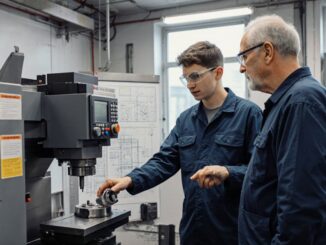
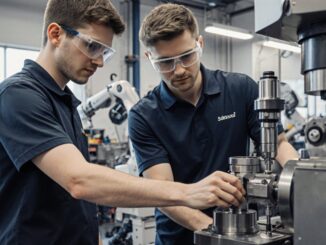
The Chambers of Industry and Commerce (IHKs) play a statutory role in Germany’s dual vocational training system by coordinating apprenticeships between employers, vocational schools, and public authorities. They register training contracts, monitor company suitability, and ensure that occupational training follows nationally recognized regulations. This institutional oversight strengthens apprenticeship readiness while aligning local labor-market needs with federal standards.
- Document and review apprenticeship contracts for legal compliance
- Advise firms on training capacity, instructor qualifications, and curricula
- Organize intermediate and final examinations through independent committees
- Issue certificates supporting transparent skill credentialing and employer recognition
IHKs also mediate disputes, provide guidance to apprentices, and support firms facing recruitment or retention challenges. Their examination and certification functions create comparable qualifications across regions, reducing uncertainty for employers and workers. By linking business participation to regulated quality assurance, the chambers help sustain vocational pathways as a central instrument of workforce development, social mobility, and industrial competitiveness.
International Trade Support From German Chambers
German chambers support internationalization by providing export market guidance on regulations, market entry, and trade documentation. They also connect firms to international business networks through the German Chamber Network and partner institutions abroad. These services reduce informational barriers and strengthen small and medium-sized enterprises’ capacity to operate across borders.
Export Market Guidance
As exporters assess unfamiliar regulatory and commercial environments, German chambers of commerce provide structured market guidance that reduces information gaps and supports compliant entry into foreign markets. Their advisory services translate country-specific rules into practical planning criteria for firms, particularly small and medium-sized enterprises.
- Market-entry briefings identify licensing, customs, and product requirements.
- Export documentation support clarifies certificates of origin, invoices, and declarations.
- Trade compliance guidance addresses sanctions, dual-use controls, and due-diligence obligations.
- Regulatory updates help exporters adjust to changing tariff and technical standards.
Chambers also provide sector-focused assessments of demand conditions, public procurement rules, and local consumer protections. This guidance improves internal risk assessment and reduces administrative errors before shipment or contract execution. By consolidating official information and explaining procedural consequences, chambers strengthen firms’ capacity to make evidence-based export decisions while preserving compliance with German, European Union, and destination-market requirements.
International Business Networks
Through international business networks, German chambers connect domestic firms with foreign partners, public institutions, and sector specialists to reduce transaction costs in cross-border trade. Their overseas offices, bilateral chambers, and partnerships with trade agencies provide structured access to local regulatory knowledge, commercial contacts, and procurement opportunities. This infrastructure supports market expansion by helping companies identify reliable distributors, assess demand, and understand licensing, customs, and compliance requirements.
Chambers also convene delegations, business-matching events, and sector forums that translate institutional relationships into practical export strategies. For smaller enterprises, these networks can compensate for limited international staff and uneven information resources. From a policy perspective, the system strengthens Germany’s export capacity while encouraging firms to diversify destinations, manage geopolitical risks, and build durable commercial links in emerging and established markets.
The Business & Economy Editorial Team covers Germany’s economy, companies, markets and international trade. Its reporting focuses on economic developments, investment, exports, the Mittelstand, major corporations and the conditions affecting businesses in Germany. The team combines current economic news with background articles and analysis to explain what developments mean for companies, investors and international readers.