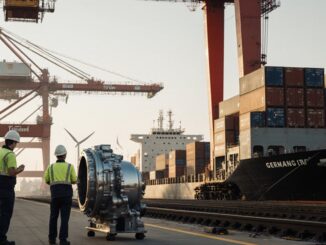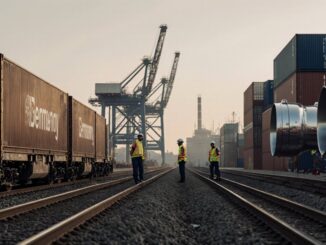
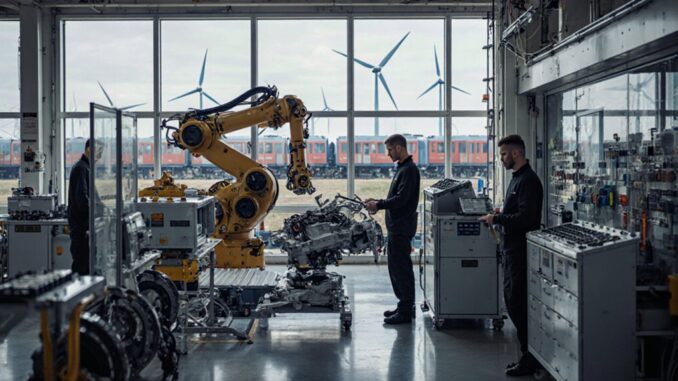
German manufacturers compete globally through precision engineering, skilled vocational talent, disciplined quality systems, and export-oriented customer focus. They emphasize reliable performance, traceable validation, and specialized products rather than low labor costs. Dense links among suppliers, research institutes, and industrial customers support continuous innovation. Diversified sourcing, multimodal logistics, and digital production tools improve resilience despite high energy and compliance costs. Their approach shows how quality, capability, and coordination create durable international advantage.
Five Advantages Behind German Manufacturing Leadership
German manufacturing leadership rests on five reinforcing advantages: engineering depth, vocational training, quality discipline, export orientation, and close integration between industry, research institutions, and suppliers. Together, these capabilities support complex production across automotive, machinery, chemicals, and industrial technology markets.
Engineering depth enables firms to compete through specialized performance rather than low labor costs. The manufacturing education pipeline combines apprenticeships, technical schools, and employer participation, creating skills aligned with factory requirements. Quality discipline reduces process variation and supports predictable delivery for international buyers.
Export orientation exposes companies to diverse regulations, customer expectations, and competitive benchmarks. This experience strengthens export workforce resilience, particularly when demand shifts across regions. Supplier networks and applied research partnerships accelerate incremental innovation while distributing technical knowledge throughout industrial clusters.
Global brand perception benefits from this operating model, especially in markets where durability, compliance, and lifecycle efficiency influence purchasing decisions. Quality driven marketing can communicate these operational strengths, but its commercial value depends on continued investment in productivity, digitalization, energy efficiency, and talent renewal.
How German Manufacturers Turn Quality Into Trust
German manufacturers convert precision into market confidence by delivering products that perform predictably across demanding applications. Consistent quality reinforces buyer trust, reducing perceived risk for customers and partners in diverse international markets. Over time, this reliability strengthens loyalty where long-term value matters more than short-term price differences.
Precision Builds Confidence
Across global industrial markets, German manufacturers convert precision into commercial trust by making performance predictable across products, production runs, and service lifecycles. Their competitive advantage often rests on precision processes that reduce variation in tolerances, materials, documentation, and testing. For buyers managing costly installations, this discipline lowers perceived operational risk and supports clearer procurement decisions.
In cross-cultural markets, precision also communicates differently but effectively: it signals engineering credibility in technical economies, reliability where supply chains are fragile, and accountability where compliance is closely scrutinized. Detailed specifications, traceable components, and measurable validation give distributors and end users evidence rather than assurances alone. This customer reassurance can justify premium positioning, particularly in machinery, automotive systems, medical technology, and industrial equipment. Confidence is built before delivery, through demonstrable control over how products are designed and verified.
Consistency Earns Loyalty
Consistency turns initial confidence into repeat business by ensuring that a product performs as expected across markets, batches, and service intervals. German manufacturers reinforce this expectation through standardized processes, rigorous supplier controls, and documented maintenance requirements. The result is a predictable Customer experience: buyers in Europe, Asia, or North America can anticipate similar performance, safety, and support.
This reliability carries commercial value beyond product specifications. Industrial customers reduce downtime risks, distributors simplify inventory planning, and procurement teams can justify long-term contracts. Reliable delivery further strengthens trust, especially where production schedules depend on tightly coordinated components. While service expectations differ across cultures, consistency provides a common benchmark of professionalism. German firms translate engineering discipline into dependable relationships, making quality not merely a technical attribute but a durable basis for loyalty and global market resilience.
Why Skilled Workers Give Germany an Edge
A highly trained workforce gives manufacturers in Germany a durable advantage in global markets, particularly in sectors requiring precision, complex engineering, and reliable production quality. Its Apprenticeship culture links classroom instruction with factory experience, creating technicians who understand both standards and practical constraints.
This capability supports competitiveness through:
- lower defect rates in demanding production runs
- faster diagnosis of equipment and process issues
- dependable handoffs between design, assembly, and service teams
- stronger compliance with customer specifications and certifications
- manufacturing pride that reinforces accountability at each stage
Compared with labor markets that separate vocational training from employer needs, Germany’s system produces deeper job-specific competence. Firms can compete on lifecycle reliability rather than primarily on low wages. International buyers, especially in industrial, automotive, medical-device, and capital-equipment markets, often value this consistency because downtime and rework carry high costs. The model also improves communication across hierarchical levels, enabling skilled operators to identify risks before products leave the plant.
How German Manufacturers Stay Ahead Through Innovation
Skilled labor provides the foundation, but sustained global leadership also depends on Germany’s ability to convert engineering knowledge into commercially relevant innovation. Manufacturers typically link applied research, specialized suppliers, universities, and industrial customers through dense innovation ecosystems. This structure shortens feedback cycles and helps firms refine products for demanding sectors such as automotive, machinery, chemicals, and medical technology.
German companies often prioritize incremental, reliable improvements alongside breakthrough development. Investment in digital manufacturing enables predictive maintenance, connected production lines, simulation, and data-supported quality control, improving productivity without sacrificing precision. Mittelstand firms contribute by adapting advanced technologies to narrow global niches, where deep customer knowledge can outweigh scale.
Cross-cultural market success also requires translating technical strengths into local value propositions. German producers increasingly tailor automation, energy-efficiency, and service offerings to regional regulations, operating conditions, and purchasing preferences. Their advantage lies less in isolated inventions than in disciplined commercialization: integrating research, production expertise, and customer collaboration into durable, high-performance solutions.
How German Manufacturers Build Resilient Export Supply Chains
German manufacturers strengthen export resilience by diversifying supplier networks across regions and balancing cost efficiency with geopolitical exposure. They apply logistics risk management through alternative transport routes, strategic inventory planning, and closer coordination with international partners. This approach helps protect delivery reliability across varied regulatory, cultural, and market conditions.
Diversified Supplier Networks
Rather than relying on a single low-cost source, many German manufacturers structure supplier networks across Europe, Asia, and North America to balance price, quality, logistics, and geopolitical exposure. Supplier diversification supports continuity while preserving access to specialized capabilities and regional market knowledge.
- European partners provide engineering alignment and regulatory familiarity.
- Asian suppliers offer scalable component production and electronics expertise.
- North American sources strengthen customer proximity and technical collaboration.
- Dual sourcing reduces dependence on individual firms or countries.
- Robust subcontracting protects capacity for critical parts.
This approach reflects Germany’s Mittelstand culture: long-term relationships are valued, but performance standards remain strict. Manufacturers assess suppliers through quality audits, financial stability, intellectual-property safeguards, and sustainability expectations. Cross-cultural procurement teams translate specifications, negotiate transparent terms, and maintain comparable process controls. The result is a broader supplier base that supports export competitiveness without sacrificing precision, compliance, or product differentiation.
Logistics Risk Management
Because export reliability depends on more than supplier capacity, manufacturers operating from Germany manage logistics risk through multimodal transport planning, regional warehousing, and real-time visibility across shipping lanes. They combine rail, road, inland waterways, air freight, and seaports to reduce dependence on any single corridor. Distribution hubs near major European markets shorten lead times and buffer disruptions caused by port congestion, strikes, weather, or geopolitical restrictions. Contingency planning increasingly includes alternative carriers, preapproved routes, and inventory policies calibrated to customer-critical components. Trade compliance teams monitor customs documentation, sanctions requirements, product classifications, and changing border procedures across diverse destination markets. This disciplined approach supports reliable delivery expectations in North America, Asia, and emerging markets, where local regulations, infrastructure quality, and business norms differ substantially. Resilience thus becomes a commercial advantage, protecting service levels and export margins.
How German Manufacturers Handle Costs and Digital Change
As labor, energy, and compliance costs remain high, manufacturers in Germany protect global competitiveness through automation, process engineering, and premium positioning rather than price-led production. Their cost discipline emphasizes lifecycle efficiency, reliability, and export-market service instead of short-term wage arbitrage.
- Automation investment reduces repetitive labor exposure.
- Digital transformation links factories, suppliers, and customers.
- Smart logistics improves inventory visibility and delivery precision.
- Energy management lowers volatility in resource-intensive operations.
- Workforce training supports adoption across technical and cultural contexts.
German firms often balance standardized digital platforms with local market requirements, particularly in North America and Asia. This approach helps preserve engineering quality while adapting to different supplier capabilities, data rules, and customer expectations. Mittelstand companies, in particular, use targeted modernization to protect margins without sacrificing specialized production knowledge. Rather than pursuing technology for its own sake, they evaluate systems according to throughput, traceability, maintenance needs, and customer value. The result is a competitive model built on operational resilience and differentiated performance.
The Industry & Manufacturing Editorial Team focuses on Germany’s industrial economy and the technologies transforming production. Coverage includes mechanical engineering, manufacturing, automation, robotics, process industries, supply chains and industrial digitalisation. Particular attention is given to the German Mittelstand, specialised manufacturers and hidden champions that play an important role in global industrial markets.